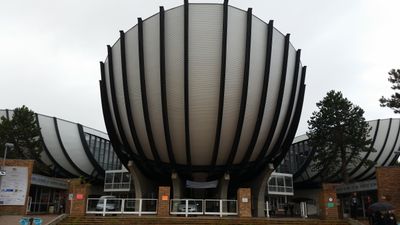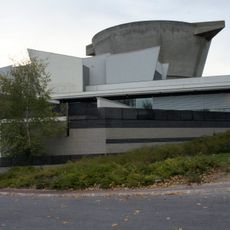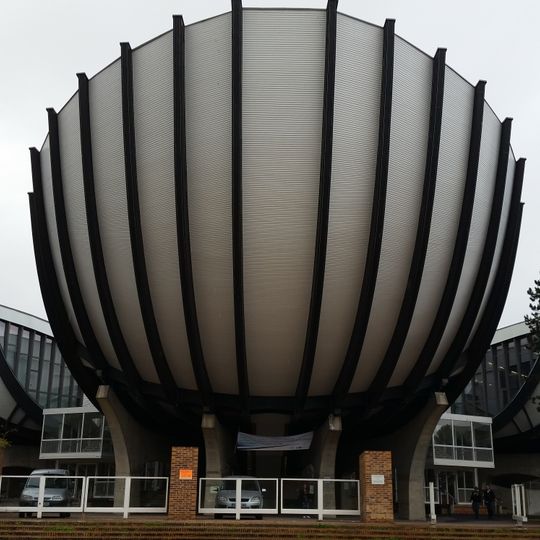
Coquilles de Reims, University amphitheaters at Reims-Champagne-Ardenne campus, France.
The Coquilles de Reims are six shell-shaped lecture halls arranged around a central courtyard with a combined capacity of roughly 2,700 people. Each building uses inverted scallop forms with wooden ribs and plywood panels supported by concrete and steel frames, with sizes ranging from 200 to 700 seats.
The complex was built between 1970 and 1974 by architects André and Denis Dubard de Gaillarbois with Robert Clauzier. The project introduced innovative laminated wood construction techniques that were groundbreaking for the period.
The structures embody a creative dialogue between nature and function, woven into how students experience their learning environment daily. The shell motif gives the campus a distinctive character that sets it apart from typical institutional buildings.
The complex is best explored on foot with plenty of open space to walk around all six buildings and the central courtyard. Note that the halls may have restricted access during teaching hours, so early morning or between sessions is often better for visitors.
The wooden shells were built using plywood panels connected by visible wooden ribs that create a striking structural system still visible today. This construction method was unusual for the 1970s and shows how the architects experimented with large-scale timber engineering.
The community of curious travelers
AroundUs brings together thousands of curated places, local tips, and hidden gems, enriched daily by 91,579 contributors worldwide.