Villa romaine de Plassac, Roman archaeological site in Plassac, Gironde, France
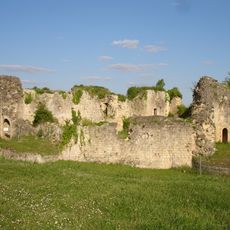
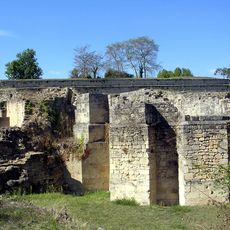
The Villa romaine de Plassac is an archaeological site on a terraced slope above the Gironde estuary, where the excavated foundations of three successive Gallo-Roman villas are visible. Low walls of small flat stones in grey, beige and reddish tones outline rectangular rooms; some sections stand to knee height with rounded mortared edges. Loose rubble lies on the bare earth, and single-storey stone buildings with low-pitched Roman-style roofs stand along the upper edge.
The site was found by chance in the 19th century and identified as a Roman villa in 1883; that year a mosaic was uncovered but reburied for lack of funds and only rediscovered a century later. Camille Jullian linked it in 1890 to an estate named in the March 616 testament of Bertrand, bishop of Le Mans. Excavations began in 1962 under Gabrielle Émard of the Touring Club de France, and the Gironde department bought the site in 1984.
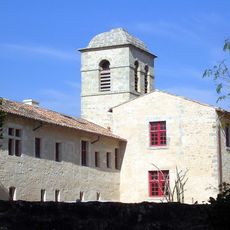
The name Plassac comes from Blattiacum, the estate of Blattius, which became Blacciacum by the early 7th century. The museum, set up in 1985 in the old presbytery, has three rooms showing wall paintings and mosaics from the site. The mosaic unearthed in 1883 was reburied for lack of funds and found again a century later.
The excavated walls stand only to knee height and rubble lies on the bare earth between them, so the footing is uneven; sturdy shoes help. The museum occupies the former presbytery in the village, separate from the terraced ruins, and holds the painted wall plaster and mosaics found on the site.
The site's name comes from its first owner: the estate was called Domaine de Blattius, which became Blattiacum, then Blacciacum by the early 7th century, and Plassac in the Middle Ages. The 1883 mosaic was reburied for lack of funds and only uncovered again a century later.
The community of curious travelers
AroundUs brings together thousands of curated places, local tips, and hidden gems, enriched daily by 92,946 contributors worldwide.