Fort Médoc, Military fort in Cussac-Fort-Médoc, France
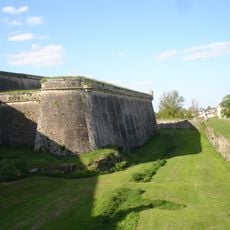
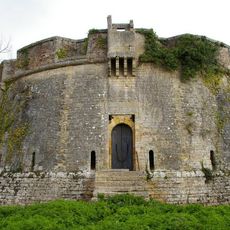
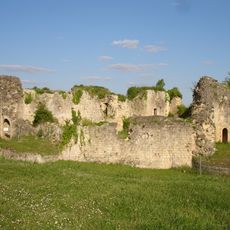
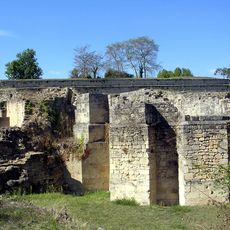
Fort Médoc is a fortification on the left bank of the Gironde estuary, built with thick stone walls, ramparts, and symmetrical bastions designed to control river traffic. The structure displays typical 17th-century military design with visible barracks areas and positions for cannon placement.
Vauban surveyed the site in 1685 and Louis XIV ordered the fort built in 1689; earthworks began that year and construction in 1691 under architect Pierre Duplessy-Michel and engineer Ferry. It formed, with Fort Paté and the Blaye citadel, a river "lock" guarding Bordeaux. The garrison never repelled an attack; the army decommissioned it in 1916 and the commune of Cussac acquired it in 1930.
Fort Médoc is named after the Médoc, the left-bank wine country where it stands, not after any military figure. Vauban's scheme paired the fort with Fort Paté and the Blaye citadel to close the Gironde to enemy ships, and the same estuary that carried Bordeaux's wine trade also carried the threat of invasion. The fort was decommissioned by the army in 1916 and became municipal property in 1930.
The site is accessible on foot with clear paths around the main structures and bastions for visitors to explore at their own pace. Comfortable shoes are recommended since some areas have uneven ground and stairs lead to elevated positions for viewing the river.
The fort never saw combat: no attack is recorded against it. In 1716 its armament was thirteen cannons of 6- and 8-pounder calibre with few cannonballs, and by 1789 only a few men, mostly invalids, and three old guns remained. The army decommissioned the site in 1916 and the commune of Cussac acquired it in 1930.
The community of curious travelers
AroundUs brings together thousands of curated places, local tips, and hidden gems, enriched daily by 94,045 contributors worldwide.