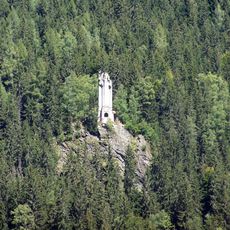
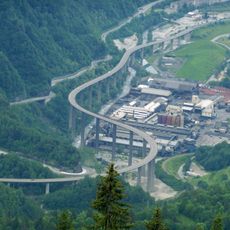
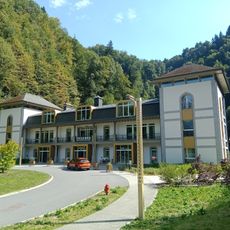
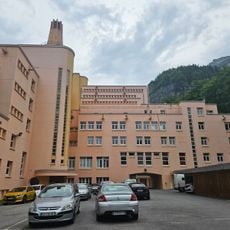
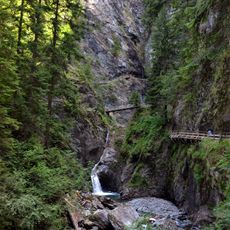
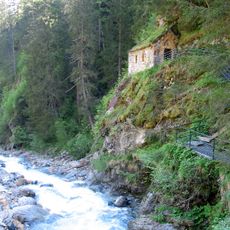
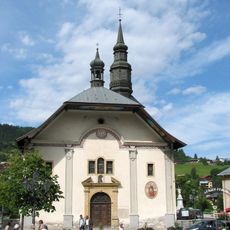
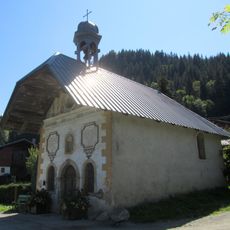
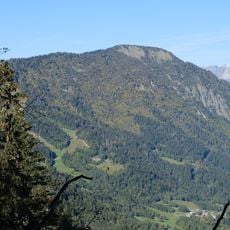
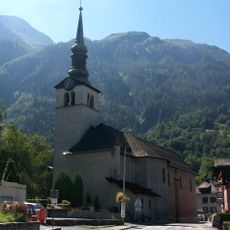
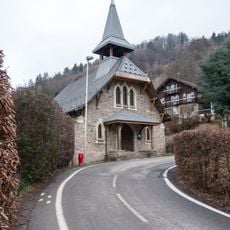
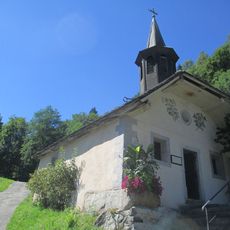
Tête Noire, Mountain summit in Passy and Les Houches, France.
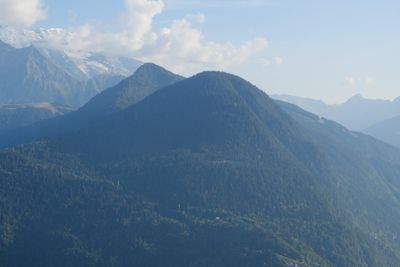
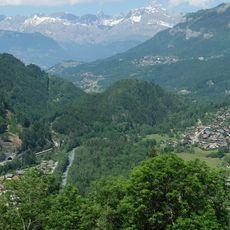
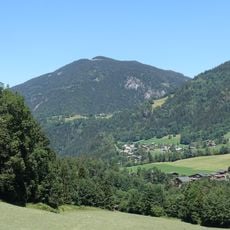
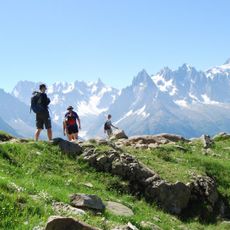
Tête Noire is a forested mountain in the Mont Blanc massif, rising to 1,746 metres at the northern end of the ridge that descends from the Aiguille du Goûter via Mont Lachat and the Col de Voza. Its rounded summit has two high points linked by a shallow saddle, and dense trees cover its slopes and top. The GRP Tour du Pays du Mont-Blanc crosses its flanks, though the summit itself is not reached by footpath.
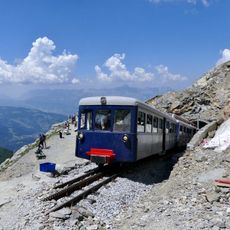
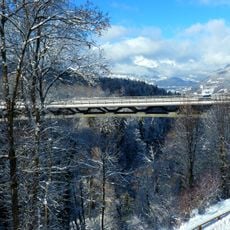
A first road was cut along the right bank of the Arve; under the Second Empire a second was built on the mountain's west, north and east flanks by widening a mule track. In the late 1970s the Égratz viaduct was added along the west flank, and around 1900 the Saint-Gervais–Vallorcine railway crossed the Arve gorges at the mountain's northern end.
The mountain's name, Tête Noire ("black head"), matches the dark conifer cover seen on its slopes. Because it stayed clear of the large tourist developments built on neighbouring mountains, its flanks keep working paths and the GRP Tour du Pays du Mont-Blanc long-distance route rather than resort facilities.
The mountain is most accessible during warmer months when the marked trails are in good condition. Sturdy footwear and a hiking map are recommended since while trails are marked, they can be demanding in this Alpine setting.
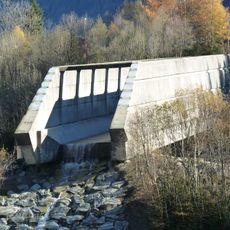
A penstock (conduite forcée) carries water from the Chamonix valley, on the east side of the mountain, through the massif to the Passy hydroelectric plant at its western foot. The pipe crosses the mountain from side to side, so the water it moves comes from a different valley than the one it serves.
The community of curious travelers
AroundUs brings together thousands of curated places, local tips, and hidden gems, enriched daily by 92,887 contributors worldwide.