Habitation Gradis, Historic sugar plantation estate in Basse-Pointe, Martinique.
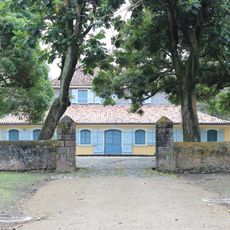
Habitation Gradis is a long two-storey building with a pale facade and a red hipped roof. A white frieze with a repeating pattern runs below the roofline, and six openings with blue louvered shutters stand open on the upper floor. The ground floor has a covered gallery on slender white columns, with dark doorways and blue shutters behind, and a hedge of green shrubs borders the lawn in front.
Mathieu de Prunes du Rivier, a former counsellor at the Parlement de Bordeaux, owned the sugar plantation and its enslaved workers before selling it in 1776 to the Maison Gradis, then run by the brothers David and Moïse Gradis, for 611,000 livres. Moïse Gradis settled on the property from 1800 to 1803 to prevent its seizure by the British, who held Martinique from 1794 to 1802. Enslaved labour continued until the final abolition of slavery in 1848.
The name Gradis comes from the Bordeaux trading house that bought the plantation in 1776 from Mathieu de Prunes du Rivier. Victor Schoelcher, passing in 1840-41, counted 22 married slave households and 85 children under 14 among 220 slaves, noting that owners paid wedding costs and a 120-franc dowry. The former master's house now holds the Centre culturel du Grand Nord, teaching theatre, dance and music.
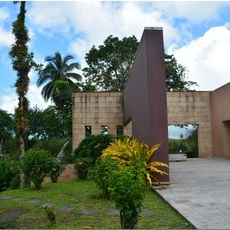
The former main house now houses the Centre culturel du Grand Nord, where art, theatre, dance and music are taught. The building sits in Basse-Pointe, on Martinique's Atlantic coast; the ground floor gallery and its slender white columns are the most recognisable part of the facade.
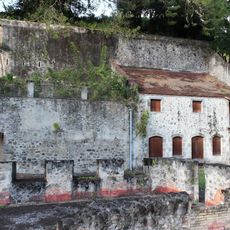
The estate is located near the birthplace of renowned poet Aimé Césaire, and its former sugar factory once used a cable system to transport sugar directly from shore to anchored ships.
The community of curious travelers
AroundUs brings together thousands of curated places, local tips, and hidden gems, enriched daily by 92,933 contributors worldwide.