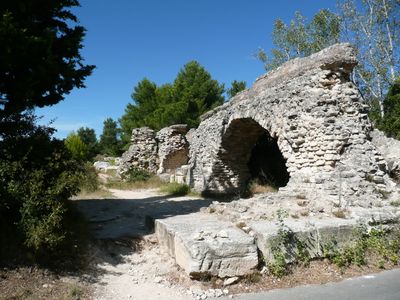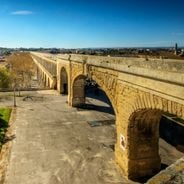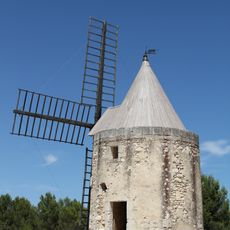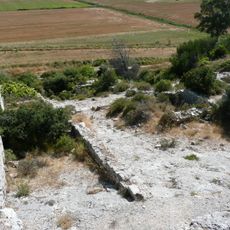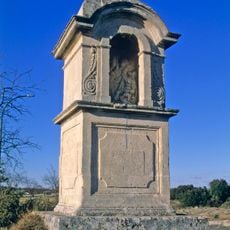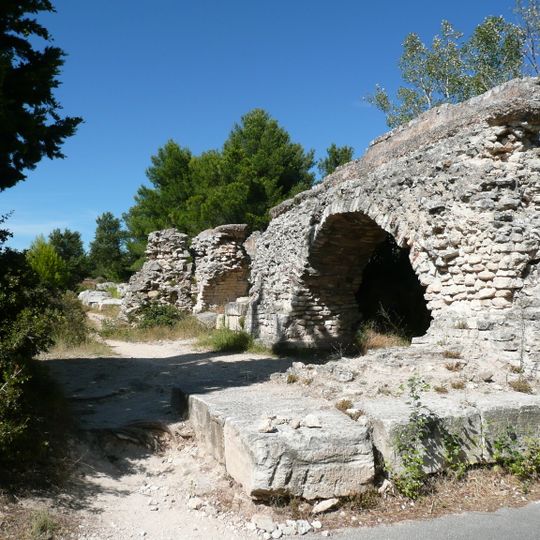
Barbegal aqueduct and mills, Roman archaeological site in Fontvieille, France
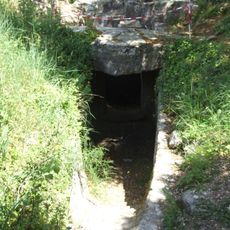
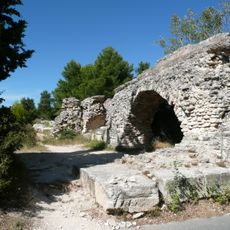
Barbegal aqueduct and mills consist of two parallel rows of 16 water wheels positioned down a slope, fed by water channels from the Alpilles mountains. Water flowed downward through the wheels, with each level grinding grain before passing the water to the next station.
The mills were built in the 2nd century AD to supply flour to the Roman city of Arles and represent a peak of Roman engineering skill. The installation operated for roughly two centuries before falling into disuse, like many ancient structures.
The site demonstrates how Roman engineers harnessed water to produce flour at an industrial scale for an entire city. This practical approach later inspired medieval monks and shaped how Europeans understood water power in manufacturing.
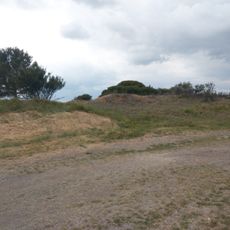
The site is located about 12 kilometers south of Arles and is accessible by car via Route de L'Aqueduc, where parking is available. From there, a short walk through olive groves leads to the main complex, and sturdy shoes work well on the unpaved paths.
The facility could grind several tons of flour daily, making it the most powerful industrial center of ancient times. This output was so remarkable for its era that archaeologists only fully recognized and understood its scale in the 20th century.
The community of curious travelers
AroundUs brings together thousands of curated places, local tips, and hidden gems, enriched daily by 60,000 contributors worldwide.