Bec de l'Aigle, Coastal cliff and summit in La Ciotat, France
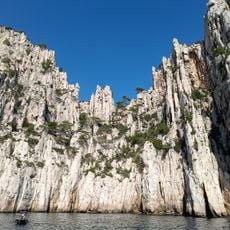
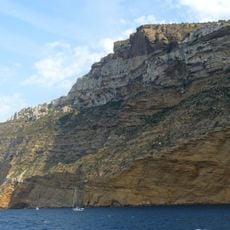
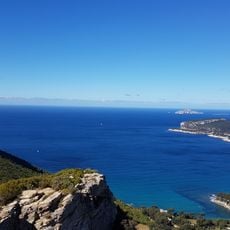
Bec de l'Aigle is a rocky formation about 155 meters high that juts into the Mediterranean at the western edge of La Ciotat Bay. Its distinctive pink rocks rise sharply from the water and create a striking landmark visible from the coastline.
The Bec de l'Aigle is a promontory at the southern end of the Soubeyranes cliffs, forming Cape de l'Aigle, which marks the western edge of La Ciotat Bay. It rises to 155 metres and continues into the sea as Île Verte. The rock is a pink conglomerate known as poudingue.
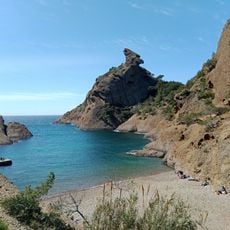
The name Bec de l'Aigle, "Eagle's Beak", comes from the pointed, horn-shaped summit that leans slightly to the right above the sea. The cape marks the western end of La Ciotat Bay and continues offshore as Île Verte. The Provençal name is Bèc de l'Agla.
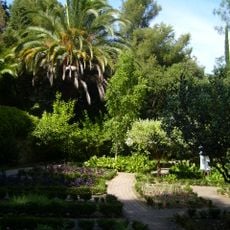
Access is through Mugel Park via a constructed path leading to several viewpoints overlooking Anse du Sec and Île Verte. The route is clearly marked and offers different stopping points to see the formation from various angles.
The Bec de l'Aigle is made of poudingue, a pink conglomerate rock in which pebbles are set within a finer matrix. The cape marks the western end of the Baie de La Ciotat and continues into the sea as the Île Verte, a small island just offshore.
The community of curious travelers
AroundUs brings together thousands of curated places, local tips, and hidden gems, enriched daily by 93,789 contributors worldwide.