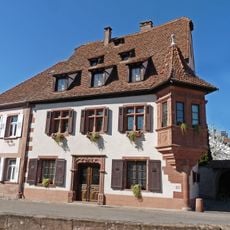
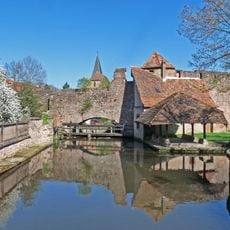
Château Saint-Paul, Medieval castle in Wissembourg, France.
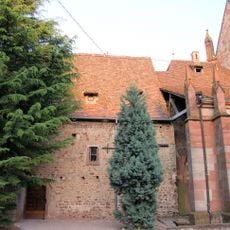
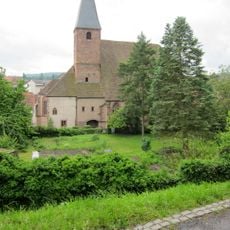
Château Saint-Paul is a square stone keep built between 1262 and 1293 under Abbot Edelin of Wissembourg, now reduced to a three-storey tower. Its flat top is edged with a crenellated parapet whose merlons are faced with lighter stone. Below the tower, a lower section with a steeply pitched roof of reddish tiles has a small dormer with a pale rectangular window to the right of the tower's base.
A chapel existed on the site around 800, and a farm with chapel is recorded in 803; the castle itself is documented from the 11th century. After destruction in the 13th century, Abbot Edelin (1262–1293) rebuilt it as a fortified residence. In the Weißenburg War, Palatine troops seized it on 7 January 1469; an alliance stormed it on 10 August 1470. It has been privately owned since the French Revolution.
Local tradition links the castle to the White Lady: during the 1480 fire set by the robber knight Hans von Trotha, the Count of Leiningen's niece is said to have thrown herself from the tower rather than surrender to the brigands, and her ghost is said to haunt the vineyards around Wissembourg. The site began as an abbey farm with a chapel recorded in 803, later a priory, then a fortified castle.
The castle is privately owned and visitors should respect posted notices and the privacy of current residents. From public areas nearby, you can see the structure from the outside fairly well.
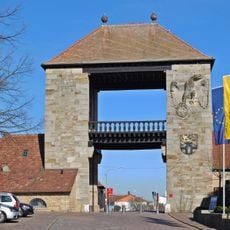
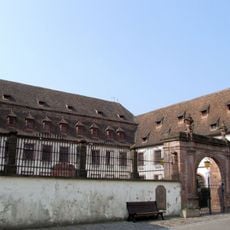
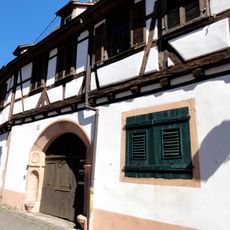
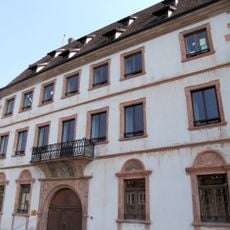
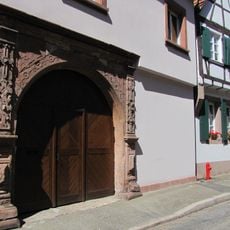
The castle has a high arched doorway on the second floor that shows how entrances were placed for defense. Another feature is a large reinforced arched doorway with a carved stone marker dating to 1830.
The community of curious travelers
AroundUs brings together thousands of curated places, local tips, and hidden gems, enriched daily by 93,485 contributors worldwide.