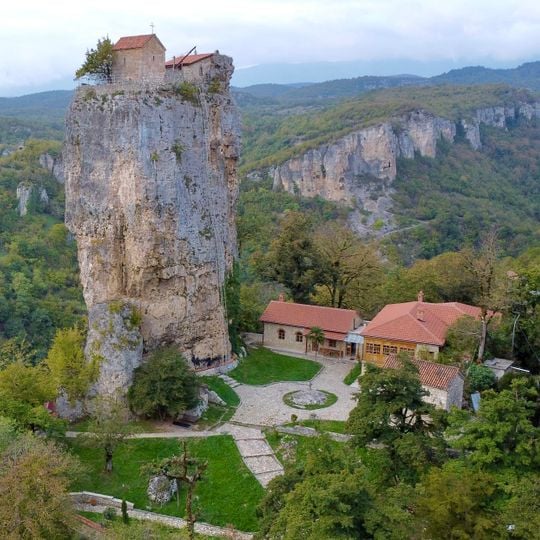
Katskhi Pillar, Church and hermitage on limestone pillar in Imereti, Georgia
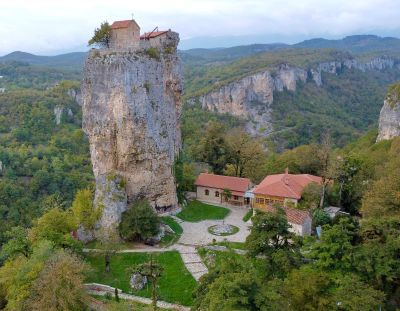
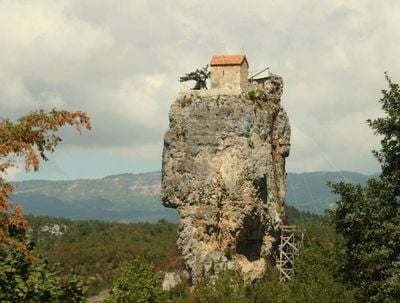
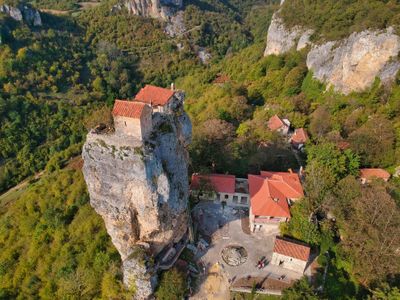
Katskhi Pillar is a limestone rock formation rising about 40 meters with a monastic complex at its summit that includes two small churches and living quarters. The structures incorporate the natural stone and contain a wine cellar, hermit cells, and a chapel dedicated to Saint Maximes.
The hermitage on the summit was built in the 9th or 10th century, as re-dated by art historian Giorgi Gagoshidze after digs in 2006; a 13th-century Georgian inscription names a certain Giorgi who built three hermit cells. The rock itself was venerated as the Pillar of Life long before, and the monastery was probably abandoned in the 16th century. The first documented ascent was on 29 July 1944, and restoration took place between 2005 and 2009.
Locals call the rock the Pillar of Life, a name tied to the True Cross and recorded in a 13th-century Georgian inscription naming a certain Giorgi who built three hermit cells. A monk still prays the Stylite liturgy on the summit once or twice a week, and women are not allowed on the top plateau.
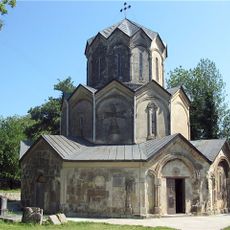
The pillar stands near Katskhi village, about 5 km northwest of Chiatura. Since 2012 visitors are no longer allowed to climb the iron ladder for safety reasons; the monastic complex can be viewed from the base, where the church of Simeon Stylites and the ruins of an old wall and belfry stand.
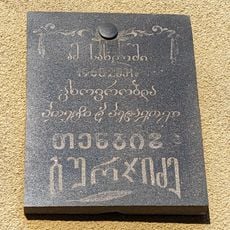
A 13th-century limestone plate found on the summit bears an asomtavruli Georgian inscription naming a certain "Giorgi", credited with building three hermit cells; it also calls the rock the Pillar of Life. The monk Maxim Kavtaradze lived on top for 20 years, reportedly spending his first nights in an old refrigerator.
The community of curious travelers
AroundUs brings together thousands of curated places, local tips, and hidden gems, enriched daily by 94,461 contributors worldwide.