Russell Glacier, Glacial formation near Kangerlussuaq, Greenland
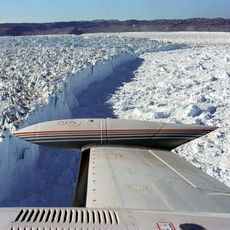
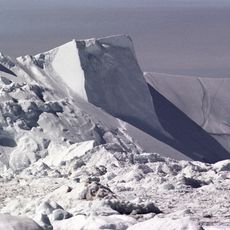
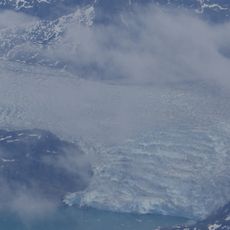
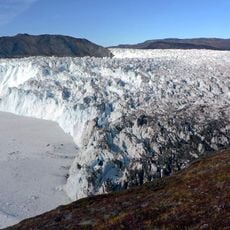
Russell Glacier is a glacial formation near Kangerlussuaq that flows westward from the Greenland ice sheet across a broad expanse of arctic terrain. The ice mass features high walls and moves gradually through the landscape.
Russell Glacier is an outlet of the Greenland ice sheet (Sermersuaq) that drains westward through Qeqqata. A 2014 study of subglacial drainage samples, dominated by Pseudomonadota, found evidence of methane cycling beneath the ice; the same research noted that on 12 July 2012 unfrozen water covered 98.6% of the ice sheet surface, the most widespread melt in 120 years. Scaled dissolved methane flux over the four summer melt months was estimated at 990 Mg CH4.
Research stations near Russell Glacier enable scientists to study methane cycling processes and monitor changes in the arctic environment.
The best time to visit is during months with longer daylight, when conditions are more accessible. Warm clothing is essential since temperatures remain very low regardless of the season.
The meltwater valley below the glacier, Sandflugtdalen, is so shallow that quicksand fields form across several kilometres. A 2014 study of subglacial drainage found methane cycling beneath the ice, estimating a dissolved methane flux of 990 Mg over the four-month summer melt season.
The community of curious travelers
AroundUs brings together thousands of curated places, local tips, and hidden gems, enriched daily by 94,019 contributors worldwide.