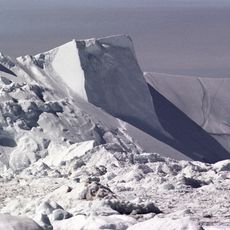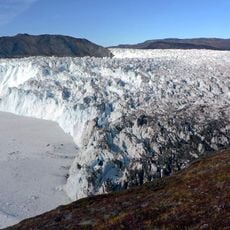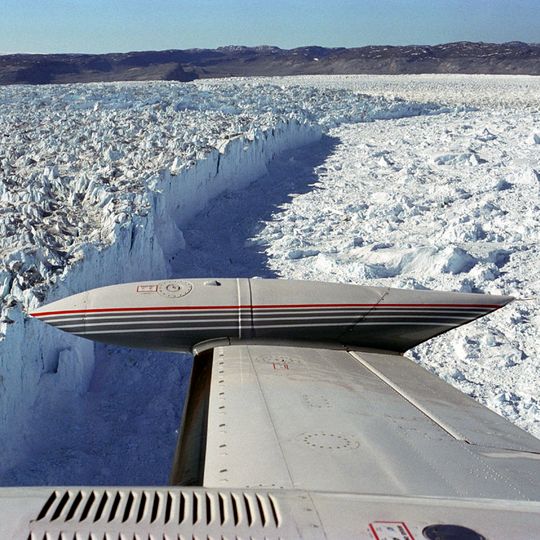
Jakobshavn Glacier, Outlet glacier in Avannaata, Greenland.
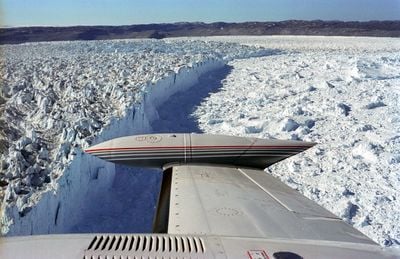
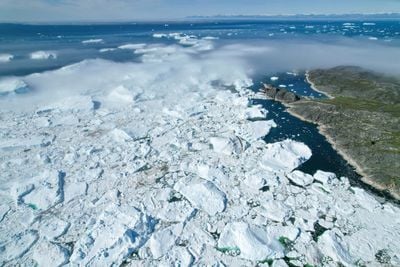
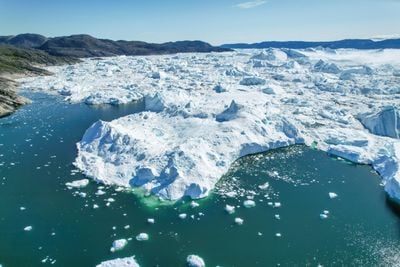
Jakobshavn is an outlet glacier in Avannaata that stretches over 65 kilometers and reaches more than 1.5 kilometers in thickness at some points. It flows from the Greenland ice sheet into Ilulissat Icefjord, where the ice calves into the sea and forms thousands of icebergs.
The name Jakobshavn entered scientific literature in 1853, when Danish geologist Hinrich Johannes Rink called the ice stream Jakobshavn Isstrøm. The glacier has retreated at least since the end of the Little Ice Age around 1850; its front now lies about 40 km further east than in 1850. After 1997 it accelerated and thinned, and in summer 2012 speeds above 46 m per day were measured, the highest recorded for an outlet glacier in Greenland or Antarctica.
The Greenlandic name Sermeq Kujalleq means 'southern glacier', as it lies south of Ilulissat. The abandoned settlement of Sermermiut, meaning 'place of the glacier people', sits just north of the glacier and shows people lived in the area for up to 4000 years. UNESCO lists the Ilulissat Icefjord under this Greenlandic name.
Most travelers view the glacier from the icefjord, either by boat or from lookout points along the coast near Ilulissat. Conditions are best during summer when daylight lasts longer and icebergs in the water are more visible.
Satellite measurements show that the glacier has accelerated over recent decades, with its flow speed doubling. This change makes it a focus for international climate studies trying to predict future shifts in Arctic ice.
The community of curious travelers
AroundUs brings together thousands of curated places, local tips, and hidden gems, enriched daily by 94,076 contributors worldwide.