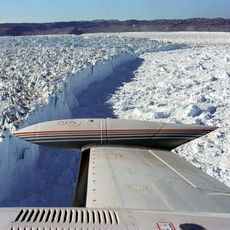
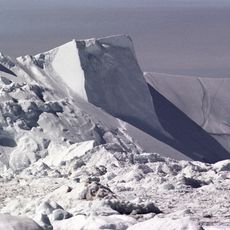
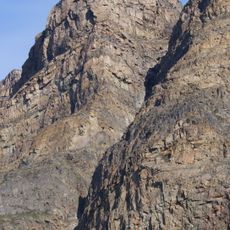
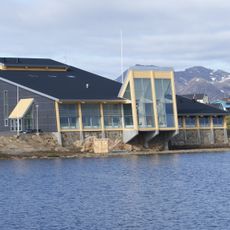
Aasivissuit–Nipisat, Cultural landscape in Qeqqata, Greenland
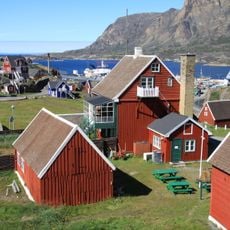
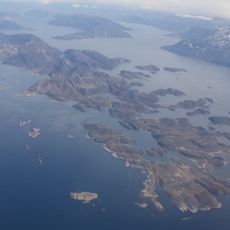
Aasivissuit-Nipisat is a cultural landscape in Greenland that contains hunting sites, settlements, and routes from different periods. The area shows how people lived and hunted across thousands of years in this harsh environment.
Occupation began around 2000 BCE with the Saqqaq culture, whose Nipisat Island site was used until at least 700 BCE, longer than anywhere else in Greenland. The Dorset culture followed, then the Thule arrived from northern Canada around 1100 CE, with the earliest local Thule artifacts dating to about 1250 CE. In the early 1700s a Danish colony on Nipisat was quickly abandoned, but colonial fishing and caribou-skin trading posts such as Saqqarliit (1851) and Sarfannguit (1843) were later established.
The landscape shows how Inuit communities lived with the arctic environment over generations and used its resources. Visitors can still see traces of this way of life in how people organized space and adapted to this demanding region.
The terrain is large and takes time to explore since there are no marked paths. It is best to go with an experienced guide to understand the scattered archaeological sites and their significance.
At Nipisat Island, excavations from 1989 to 1994 uncovered over 70,000 bone fragments of game animals and 1,000 Saqqaq artifacts. Radiocarbon dates there show the Saqqaq stayed in this region until at least 700 BCE, longer than anywhere else in Greenland.
The community of curious travelers
AroundUs brings together thousands of curated places, local tips, and hidden gems, enriched daily by 94,456 contributors worldwide.