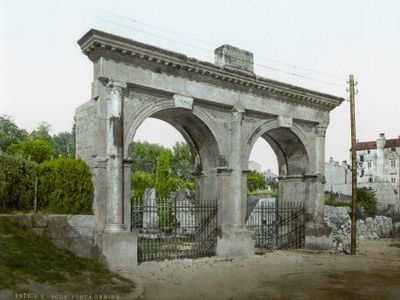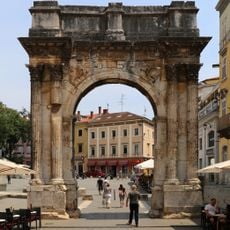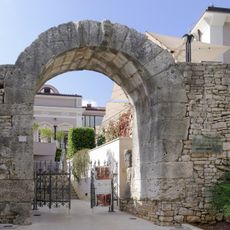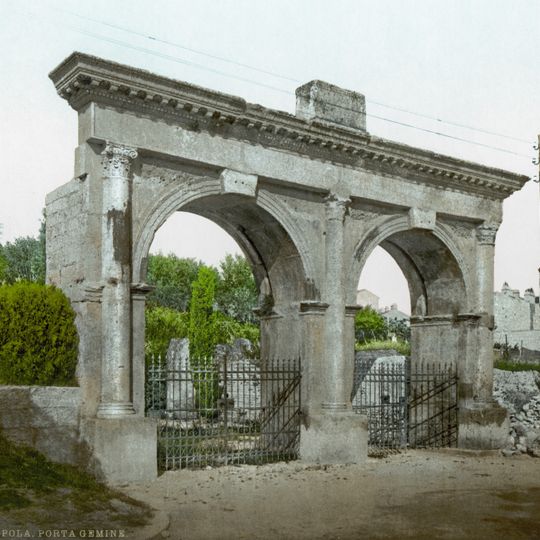
Porta Gemina, Roman city gate in Pula, Croatia.
Porta Gemina is a Roman city gate in Pula featuring two arched passages flanked by four pilasters with decorative capitals and relief carvings above the openings. The structure showcases the architectural style typical of the late Roman period and served as one of the main entrances to the ancient settlement.
The gate was constructed in the late 2nd century CE, replacing an earlier entrance to the settlement. It stood as one of ten gates that formed part of the ancient city's defensive walls.
The inscriptions at the gate mention Lucius Menacius Priscus, a wealthy citizen who funded the water supply system for the Roman settlement. His name remains visible today, connecting visitors to the individuals who shaped the ancient city.
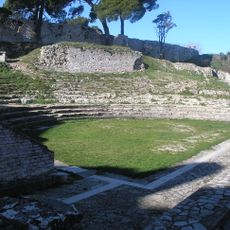
The gate sits near the Archaeological Museum of Pula and provides direct access to the castle and a small Roman theatre located in the northern area. Visitors will find the neighboring attractions easily reachable on foot from this point.
Nearby stands a reconstructed octagonal mausoleum from the 2nd century CE, highlighting the archaeological importance of the location. This burial structure reveals how wealthy residents honored their deceased family members.
The community of curious travelers
AroundUs brings together thousands of curated places, local tips, and hidden gems, enriched daily by 91,446 contributors worldwide.