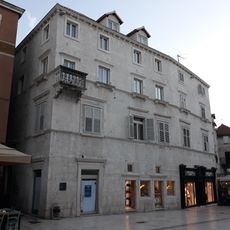
Cellars of Diocletian's Palace, Roman underground chambers in Split, Croatia
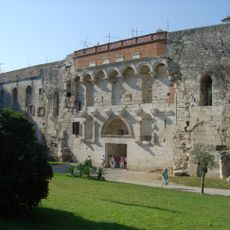
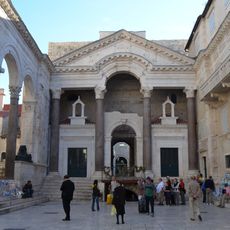
The Cellars of Diocletian's Palace are barrel-vaulted substructures at the southern end of the palace, covering about an eighth of its area. A central corridor on the Cardo maximus, leading from the Peristyle to the Bronze Gate, divides them into western and eastern halves. Their halls take basilical, central, cross-shaped and rectangular forms, and their walls supported the imperial apartments above.
These substructures were built between 295 and 305 CE to support the emperor's living quarters while serving as storage for palace supplies. Their construction was part of Diocletian's grand vision to create a monumental retreat on the Adriatic coast.
Locals long called the substructures "Grote" and held them to be the dungeons where Diocletian tortured Christians, a belief the sources record without confirming. In the Middle Ages part of the complex was lived in, and remains of an oil and wine press (turnjačica) are still shown in the hall where they were found. Today the western halls serve as a fair and exhibition space.
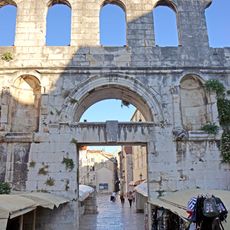
You can enter through two main access points: the Porta Aenea from the Riva waterfront or the staircase from the Peristyle. The ground is uneven in places and the chambers stay cool, so wear comfortable shoes and bring a light jacket.
The well-preserved basement halls allow archaeologists to reconstruct the exact layout of the imperial apartments that once stood above them. This underground maze reveals more about daily palace life than many other ruins in the region.
The community of curious travelers
AroundUs brings together thousands of curated places, local tips, and hidden gems, enriched daily by 92,642 contributors worldwide.