Cathedral of Saint Domnius, Catholic cathedral in Split, Croatia
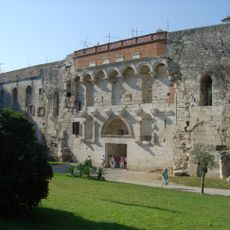
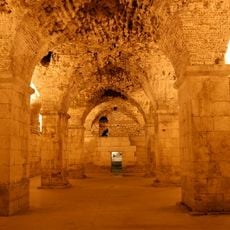
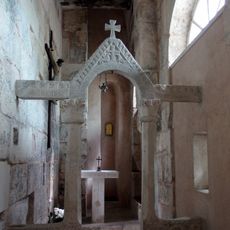
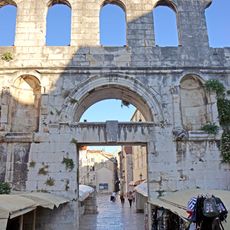
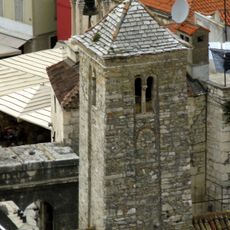
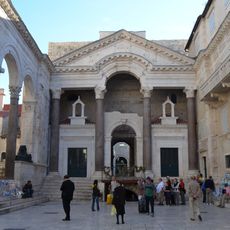
The Cathedral of Saint Domnius occupies Diocletian's mausoleum, an octagonal stone building of AD 305 set inside Diocletian's Palace. Its exterior was once ringed by a portico of 24 marble columns with Corinthian capitals; the interior is circular, with four semicircular and four rectangular niches, eight red granite Corinthian columns, and a dome of fan-shaped brickwork. A Romanesque bell tower of light masonry with tiers of arched openings rises beside it.
Built around AD 305 as the Mausoleum of Diocletian inside his palace, the octagon held the emperor's sarcophagus until the 7th century. When Avars and Slavs destroyed Salona, refugees settled in the abandoned palace, turned the mausoleum into a church, removed the pagan idols and the sarcophagus, and brought the relics of Saint Domnius and Saint Anastasius from Salona's ruins. Tradition recorded by Thomas the Archdeacon credits the first archbishop, John of Ravenna, with the conversion.
The walnut doors were carved in 1214 by the Split native Andrija Buvina, with 28 scenes from the life of Christ, fourteen on each wing, from the Annunciation to the Resurrection. Their lowest parts are worn by the hands of passers-by. The cathedral is dedicated to the Virgin Mary, while the bell tower belongs to Saint Domnius, Split's patron, whose feast day brings an annual procession.
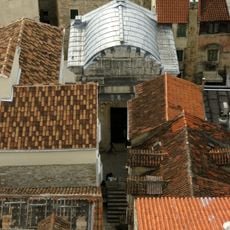
A staircase leads to the top of the bell tower, where visitors can enjoy views over the old city and the surrounding coast. Sturdy footwear is recommended, as the steps are steep and narrow.
Above the main portal sits a small sarcophagus holding the remains of Catherine and Margaret, daughters of King Béla IV of Hungary, who died at Klis during the Mongol invasion in the mid-13th century. Most visitors pass beneath it without looking up.
The community of curious travelers
AroundUs brings together thousands of curated places, local tips, and hidden gems, enriched daily by 94,661 contributors worldwide.