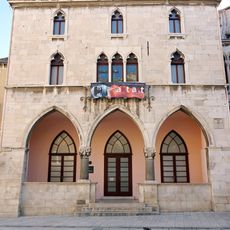
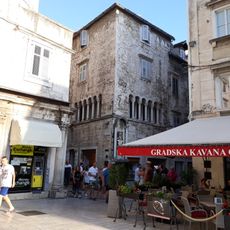
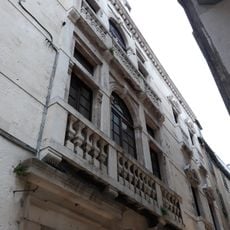
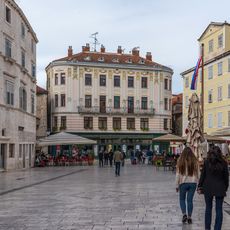
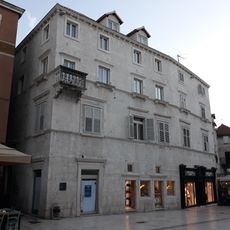
Saint Francis Monastery and Church, Neoclassical monastery and church in Split, Croatia
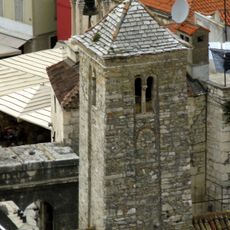
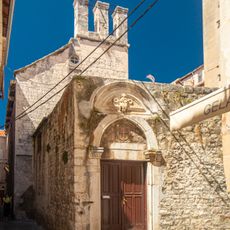
The Church and Monastery of St. Francis stand at Trg Franje Tuđmana 1, at the western end of the Riva, where the Grad district meets Veli Varoš. The single-nave church has a rectangular apse and a bell tower built in 1902 to a design by Ante Bezić. A 14th-century cloister survives from the older complex, and the church preserves a painted crucifix by Blaž Jurjev Trogiranin from 1450.
The site rests on early Christian ground connected to the grave of a martyr from an ancient period of persecution. The current structure developed over centuries, with different phases of construction and renovation preserving foundations from much older times.
The monastery is called the "Little Pantheon of the Croatian People" because of the tombs inside: Toma Arhiđakon, author of the Historia Salonitana; Marko Marulić, called the father of Croatian literature; Ivan Lukačić, composer of the Sacrae cantiones (1620); and the poet Jeronim Kavanjin. In the cloister stands Ante Trumbić's sarcophagus, carved by Ivan Meštrović.
The complex stands at Trg Franje Tuđmana 1, at the western end of the Riva, where the Grad district meets Veli Varoš. The entrance is on the waterfront side, so the church is easy to reach on foot from the old town. The 14th-century cloister and the 1902 bell tower by Ante Bezić are the parts to look for.
The sarcophagus of Ante Trumbić (1864–1938), Split's mayor and a Croatian politician, stands in the cloister, not inside the church, and was carved by Ivan Meštrović. The cloister itself survives from the early 14th century, the only part kept when the old monastery was demolished before the 1908 rebuilding.
The community of curious travelers
AroundUs brings together thousands of curated places, local tips, and hidden gems, enriched daily by 94,018 contributors worldwide.