Topana, Medieval fortress in Imotski, Croatia
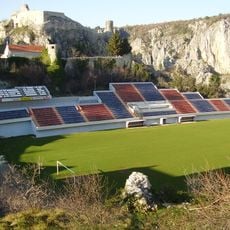
Topana is a stone fortress that sits on steep cliffs between the Blue Lake and a football stadium, with an irregular shape following the natural rock formations. Residential spaces remain visible along the western and northern walls, and old water wells that once supplied the garrison can still be seen.
Topana was built in the 10th century, making it one of the most important medieval fortifications of inland Dalmatia. A pre-Romanesque pilaster with plaited motifs, found at the threshold of the Romanesque gateway, points to an early Slavic church nearby. The Imotski district passed to Byzantine rule in 1165, then to Croatian bans acting for Hungarian kings from 1180; the Ottomans took Imotski in 1493 and held it until the Peace of Passarowitz in 1718.
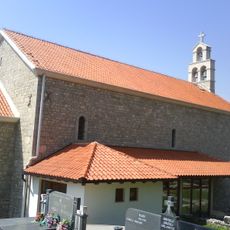
The fortress church, now dedicated to Our Lady of Angels, began as the mosque of the lower fort and was rebuilt as a Catholic church after the Ottoman departure. The cemetery was later laid out beside its walls. The name Topana comes from the Ottoman term tophana, meaning cannon foundry or store, after the northeast cannon platform built around 1663.
Sturdy shoes are needed for the climb as the paths cross rocky terrain and are steep, especially after rain. The best time to explore is early morning or late afternoon when the sun does not beat directly on the exposed rock faces.
The name Topana comes from a Turkish word meaning a cannon storage place, reflecting its military role during Ottoman occupation. This naming connects the fortress directly to the centuries of foreign rule that shaped the town's history.
The community of curious travelers
AroundUs brings together thousands of curated places, local tips, and hidden gems, enriched daily by 94,035 contributors worldwide.