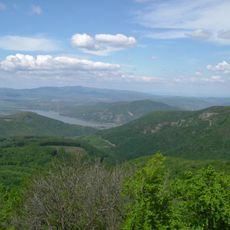
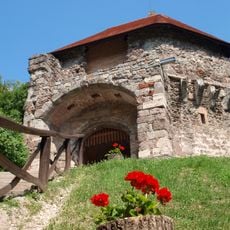
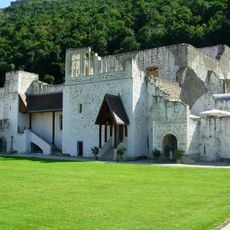
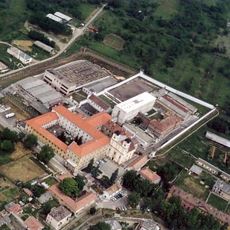
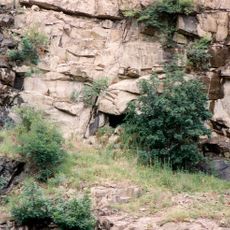
Castra Ponte Navata, Roman military fort on Sibrik Hill, Visegrád, Hungary.
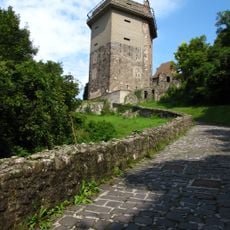
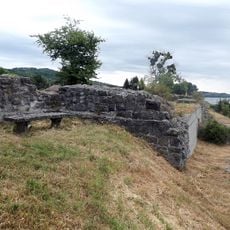
Castra Ponte Navata, probably called Pone Navata in antiquity, is a late Roman fort on the Sibrik Hill above Visegrád. Its walls, 1.1 to 1.2 metres thick, enclose an irregular, roughly triangular or kite-shaped area of about 114 by 130 metres, with eleven horseshoe-shaped side towers and three fan-shaped corner towers. The interior held only small rooms against the inner wall face.
The fortress was built in the 4th century as part of the Pannonian Limes to protect the eastern frontier of the Roman Empire. Later, the site was adapted and used as a Hungarian castle after the region came under different control.
The name Visegrád, first recorded in 1009, means "high castle" and was likely given by 9th-century Slavic settlers. After the Magyar conquest the repaired Roman walls became Visegrád castle, seat of one of the first Hungarian counties. Altar stones and statues found in the fort are displayed in the Salomon Tower in Visegrád.
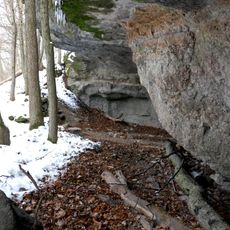
The site is accessible via marked trails on Sibrik Hill where foundation stones and defensive structures can be seen. Wear sturdy shoes since the terrain is uneven and the archaeological remains are scattered across the hillside.
In the northeast fan-shaped corner tower, excavators found bricks stamped with the name of Terentius Dux, a commander in office until 371. Altar stones and statues unearthed in the fort are now displayed in the Salomon Tower in Visegrád. One corner of the site holds a private house.
The community of curious travelers
AroundUs brings together thousands of curated places, local tips, and hidden gems, enriched daily by 94,314 contributors worldwide.