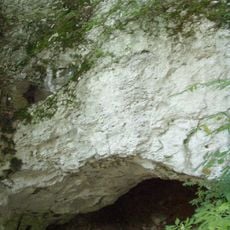
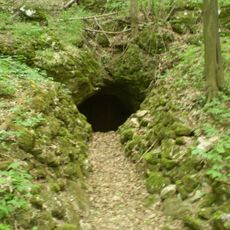
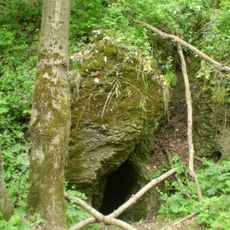
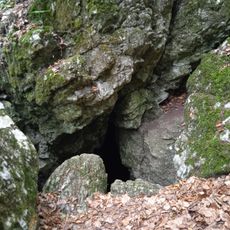
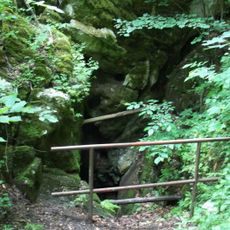
Szent István Cave, Show cave in Lillafüred, Hungary
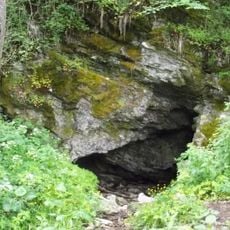
Szent István Cave is a limestone show cave in the Szinva valley at Lillafüred, 331 metres above sea level. Its roughly 710-metre length includes three large halls, a great fissure, three chambers, two shafts and a 15-metre-deep pit called Hell. The lit visitor route passes the Mammoth Tooth Row, Fairyland, the Column Hall and the Theatre Hall.
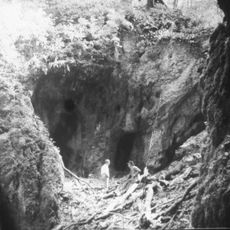
The cave was discovered in 1913 after a dog fell into a 15-metre-deep natural shaft, its barking leading rescuers to the opening. Ottokár Kadić first explored it that same year. Development began in 1927 under Ferenc Révay, who created a tourist entrance and installed lighting; the cave opened to visitors in 1931. During World War II, stalactites and stalagmites were broken by people sheltering from air raids, and lighting was repaired only in 1955.
The cave is named after King Stephen I of Hungary, and the name Szent István-barlang first appeared in literature in 1932. Earlier and regional names include Kutya-barlang (Dog Cave), recalling the dog that fell into the shaft, and Vödörlapító-barlang.
The cave is open daily from April through October and requires a guide for safe passage through the routes. Sturdy footwear and a light jacket are recommended since underground temperatures remain cool year-round.
The cave's air is nearly 100% humid and free of dust, so in 1988 a section called the Fekete-terem (Black Hall) was turned into a healing cave for people with respiratory illnesses. It is one of Hungary's specially protected caves and became a healing cave in 1991.
The community of curious travelers
AroundUs brings together thousands of curated places, local tips, and hidden gems, enriched daily by 93,447 contributors worldwide.