Szeleta Cave, Archaeological cave site in Lillafüred, Hungary.
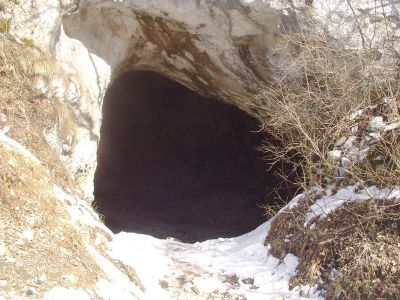
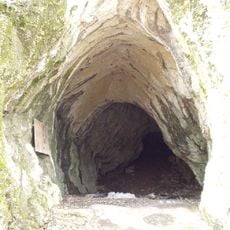
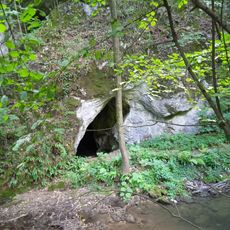
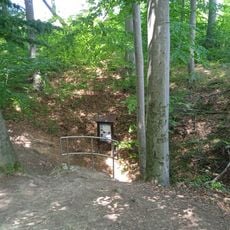
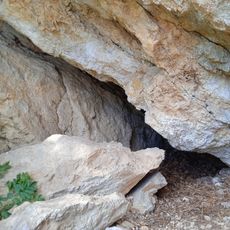
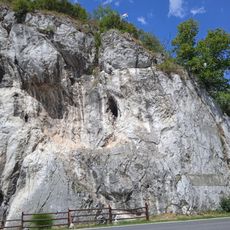
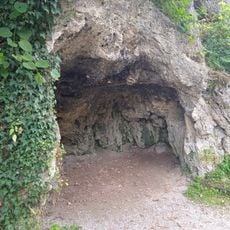
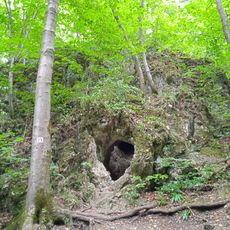
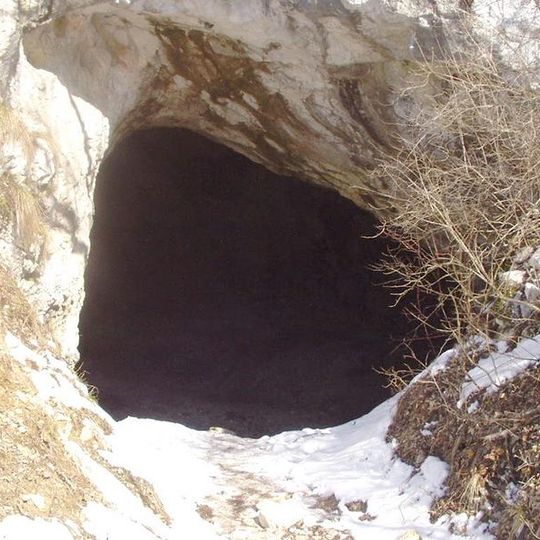
Szeleta Cave is an inactive spring cave formed in Triassic rock, 115 m long and 13 m high, with its entrance on the southern slope of Szeleta Peak at 347 m above sea level, opposite the Hámori cemetery. Inside, a slope descends into an entrance hall where a depression marks the former 12 m deep excavation; a black line on the side wall shows the original sediment level. From the hall, a shorter straight branch leads left and a longer branch continues straight.
Ottokár Kadić began test excavations in November 1906 and, from May 1907, dug a 12 by 2 metre trench in the entrance hall, reaching a Pleistocene hearth among cave-bear bones. Jenő Hillebrand joined in 1909, and the work continued until 1913, reaching the cave floor at 12.5 metres. Seven stratigraphic levels were later distinguished, with levels 3 to 6 assigned to the Szeletian culture.
The site gave its name to the Szeletian culture, representing a transitional period between Middle and Upper Paleolithic periods from 44,000 to 40,000 years ago.
The entrance lies on the southern slope of Szeleta-tető, 98 m above the Szinva valley and 347 m above sea level, opposite the hámori cemetery on the edge of Lillafüred. Inside, a slope descends from the entrance into the chamber, where a depression marks the former excavation trench dug 12 m deep. From the chamber a shorter arm runs to the left and a longer one straight ahead; the cave is 115 m long.
A black line on the cave wall marks the original sediment level from the early 20th century. This marking helps visitors understand the depth of archaeological digging that took place here.
The community of curious travelers
AroundUs brings together thousands of curated places, local tips, and hidden gems, enriched daily by 94,378 contributors worldwide.