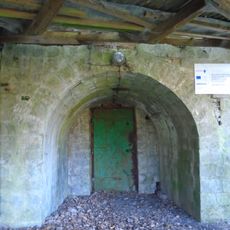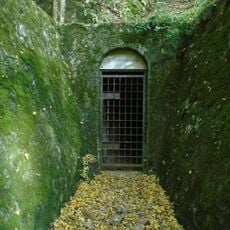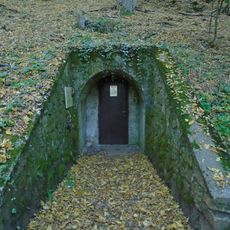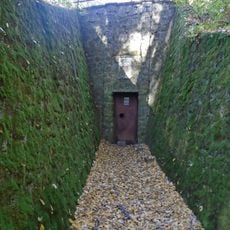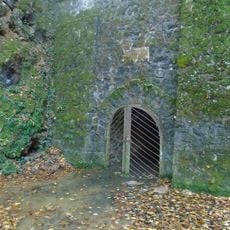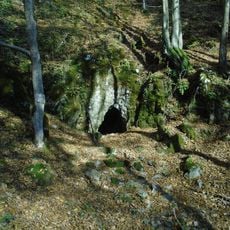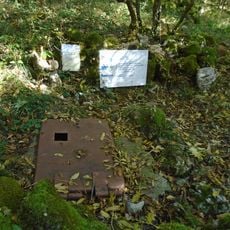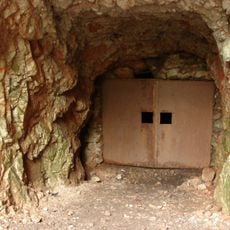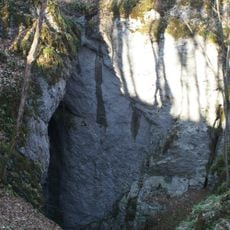
Caves of Aggtelek Karst and Slovak Karst, Cave system in Borsod-Abaúj-Zemplén County, Hungary and Košice Region, Slovakia.
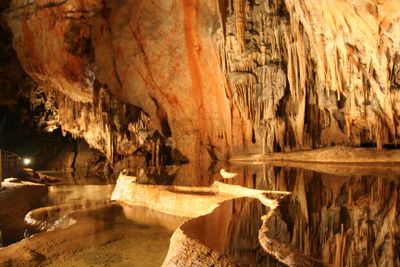
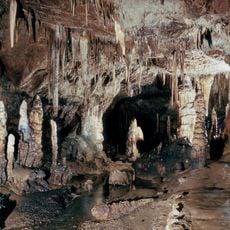
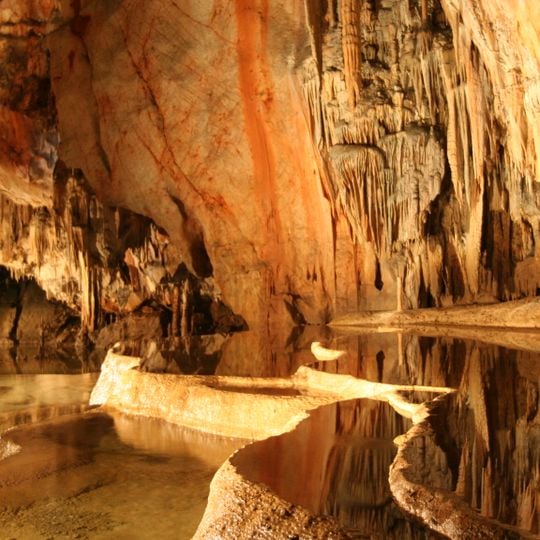
The Caves of Aggtelek Karst and Slovak Karst cover 55,800 ha along the Hungary-Slovakia border and comprise seven components: Aggtelek, Szendrő-Rudabánya Hill and Esztramoill in Hungary, plus Dobšiná Ice Cave, Koniar plateau, Plešivec plateau and the Silica-Jasov area in Slovakia. The Baradla-Domica complex runs 21 km, about a quarter of it in Slovakia. Inside, pale stone walls carry broad orange and rust-red bands, and closely packed columns rise beside a still reflecting pool.
The Baradla cave was first mentioned in writing in 1549, and from 1920 it has been open to tourists. Ján Majko discovered Domica Cave, the Slovak part of the complex, in 1926; its 1,700-metre tour route opened in 1932. The caves were inscribed as a UNESCO World Heritage Site in 1995, and Dobšiná Ice Cave joined the listing in 2000.
The name Domica comes from the Slovak word for a cave hollow, and the cave was discovered by Ján Majko in 1926. Its 1,700-metre tourist circuit opened in 1932. Finds in the Baradla-Domica complex show habitation as far back as 5000 BC, and the site is a key archaeological locality of the Bükk Culture.
Visiting is possible year-round since the underground environment maintains steady conditions regardless of the season. Wear sturdy shoes and bring a jacket, as the passages stay cold and damp with uneven floors and tight spaces in some sections.
Dobšiná Ice Cave, discovered by Eugen Ruffinyi in 1870, became Europe's first electrically lit cave in 1887, one year after opening to the public. About a third of its 1,483 m length is open from May to September, and the ice on its floor reaches nearly 25 m thick.
The community of curious travelers
AroundUs brings together thousands of curated places, local tips, and hidden gems, enriched daily by 92,748 contributors worldwide.