Jókai Garden, Protected garden in Budapest District XII, Hungary.
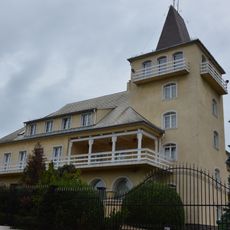
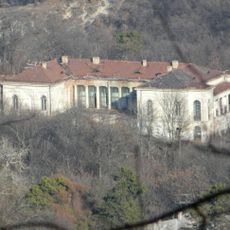
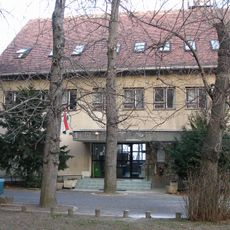
Jókai Garden is a two-hectare protected nature reserve on Svábhegy in Budapest District XII, on the site of the former Jókai villa, which was demolished; only the press house remains. The garden is terraced and filled with fertile soil, with lime, maple, chestnut and walnut trees planted as a windbreak, plus fruit trees, vines, a kitchen garden and roses. The buildings now house the Duna–Ipoly National Park Directorate, the Keve András Ornithological Library and the Hungarian Ornithological Society, and the press house holds the Jókai memorial room.
In 1853 Mór Jókai, aged 28, bought a two-hectare plot used as a stone quarry from violin maker Schweitzer for 2,200 forints, paid from the royalties of his novels Egy magyar nábob and Kárpáthy Zoltán. He terraced the slope, added topsoil, planted lindens, maples, chestnuts and walnuts as a windbreak, plus fruit trees, vines, a kitchen garden and roses. After his death the site was neglected and his villa was demolished, but the press house survived. It became a nature reserve of national importance in 1975 and a protected historic garden in 2007.
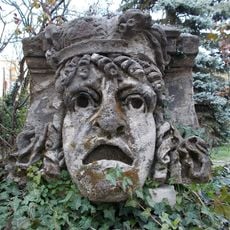
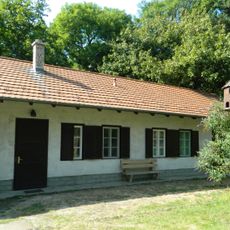
The garden bears the name of Mór Jókai, who bought the two-hectare plot in 1853 from violin maker Schweitzer for 2,200 forints, paid from the royalties of his novels Egy magyar nábob and Kárpáthy Zoltán. In the press house, now managed by the Petőfi Literary Museum, the Jókai memorial room displays the writer's personal objects; its rough-stone wall was built from material of the original villa. Róna József's statue of Anacreon stands in the park, its face modelled on Jókai, beside a stone bench with lions like the writer's own.
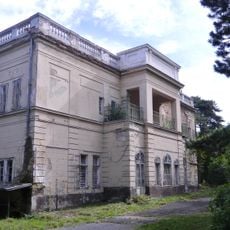
The garden is free for individual visitors during opening hours. The Jókai memorial room is on the ground floor of the renovated press house, and the Anakreón statue by Róna József stands in the park beside a stone bench with lions modelled on the writer's own. The neighbouring Steindl Villa holds the "Madárország" exhibition.
The Anakreón statue in the park has a face modelled on Mór Jókai by sculptor József Róna, and beside it stands a stone bench with lions copied from the writer's own. The memorial room's rough-stone wall was built from material of the demolished Jókai villa.
The community of curious travelers
AroundUs brings together thousands of curated places, local tips, and hidden gems, enriched daily by 92,984 contributors worldwide.