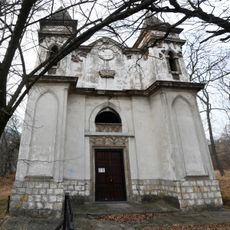
Makkosmária kegytemploma, Catholic church in Budakeszi, Hungary.
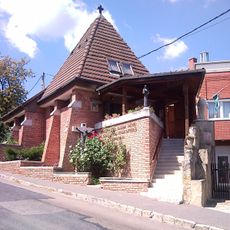
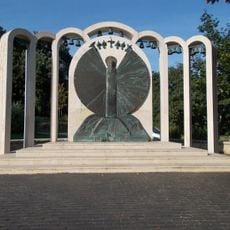
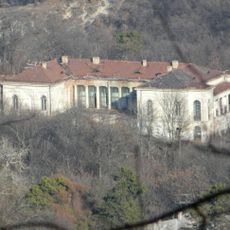
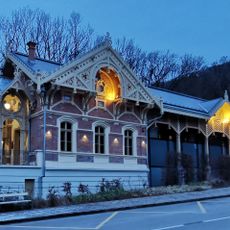
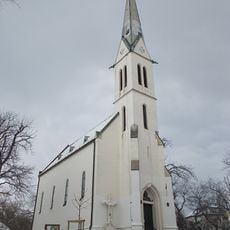
Makkosmária kegytemploma is a Catholic church in Budakeszi featuring white walls and baroque architectural style. The building displays ornamental details both inside and outside that reflect its religious purpose and historical construction period.
In 1731 a young man named Traub János saw the face of Christ at a roadside oak near Budakeszi; after his recovery he placed an oil painting of the nursing Virgin there, and the bishop of Veszprém authorised its veneration. A small chapel was built over the image, then Trinitarian monks from Óbuda erected a single-towered church and monastery, consecrated by Bishop Koller Ignác in 1768 before more than ten thousand pilgrims. Dissolved under Joseph II in 1784, the site fell to ruin until the Servites rebuilt the present church between 1938 and 1947, consecrated in 1950.
The name Makkosmária refers to the oak (makk) that once stood by the road. Since the war years pilgrims have prayed here for prisoners and captives, reviving the Trinitarian tradition of ransoming Christians, and today prayers are also offered for people bound by drugs, alcohol and gambling.
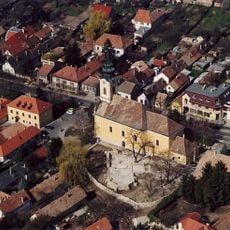
The church stands in Makkosmária, a hamlet of a few houses and farm buildings in southeastern Budakeszi, reached by road from Budakeszi. Mass is held on Sundays and Marian feast days, and the building is kept by the Dominican Order. The oak trunk and the painting are displayed inside, so allow time to see both.
The oak trunk on which the wonder-working painting stood is kept inside the church, brought back from the Budakeszi parish church after the Servites rebuilt the sanctuary between 1938 and 1947. The painting itself, bought from the Buda painter Falkoner, hangs here too.
The community of curious travelers
AroundUs brings together thousands of curated places, local tips, and hidden gems, enriched daily by 93,754 contributors worldwide.