Nine-holed Bridge, Arch bridge in Northern Great Plain, Hungary
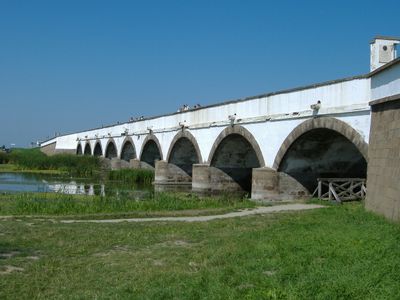
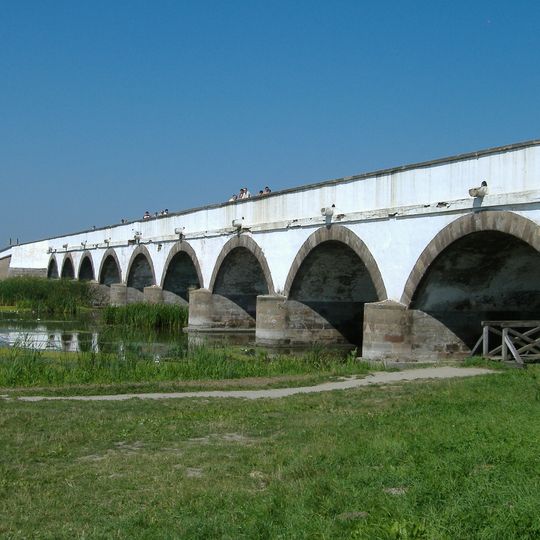
The Nine-holed Bridge is a white-painted stone bridge with nine arches, built in a Classical style between 1827 and 1833 to Ferenc Povolny's design. It crosses the Hortobágy river: the distance between the abutments on the two banks is 92.13 metres, while the whole structure measures 167.3 metres. The parapet runs unbroken along the flat top, and the arch openings are dark against the white face.
The stone bridge was completed in 1833, replacing an earlier wooden crossing from 1697. It held the record as the longest road bridge in historical Hungary until 1921.
The bridge shapes how people experience the open plains, serving as a natural stopping point for visitors exploring the national park. Many travelers pause here to photograph the landscape and take in the vast horizons of the surrounding grassland.
The bridge is easy to reach from the town of Hortobágy and sits at the edge of the national park. Visitors should wear sturdy shoes, as the ground and paths around the structure vary in surface conditions.
The approach sections on both ends are deliberately wider to allow livestock herds to safely cross the structure. This design feature shows the bridge was built not only for travelers and carts, but also served an essential role in the region's agricultural trade.
The community of curious travelers
AroundUs brings together thousands of curated places, local tips, and hidden gems, enriched daily by 94,671 contributors worldwide.