Zádor-híd és Környéke Természetvédelmi Terület, Protected nature area in Karcag, Hungary
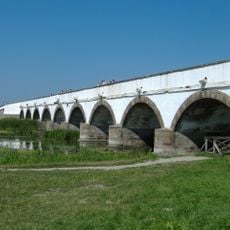
The Zádor Bridge Nature Conservation Area covers 71.5 hectares of saline steppe northeast of Karcag, centred on a five-arch stone bridge that is now a listed monument. The bridge stands dry, parallel to the Karcagi-I canal, amid cickafark and wormwood salt-steppe vegetation.
Karcag officials decided in 1804 to build a permanent stone bridge over the Zádor stream. Its foundation stone was laid on 27 November 1806, and it opened to traffic in 1809 with nine arches. The 1830 flood swept away two outer piers; the rebuilt bridge took its present five-arch form. It served as a model for the Hortobágy stone bridge completed in 1833.
The area supports traditional grazing practices on open grasslands that have shaped this landscape for generations. Visitors can observe livestock moving across the fields, which form a natural part of how this protected land functions today.
The site is accessible year-round, though warmer months offer the best conditions for walking through the grasslands and observing the structure. Parking is available near the old postal route that passes through the area.
Today the bridge stands in a dry landscape, as the natural waterways that once ran through this region have disappeared. This environmental shift makes the surviving structure a silent witness to the area's historical water management practices.
The community of curious travelers
AroundUs brings together thousands of curated places, local tips, and hidden gems, enriched daily by 92,652 contributors worldwide.