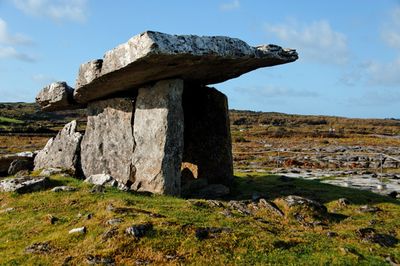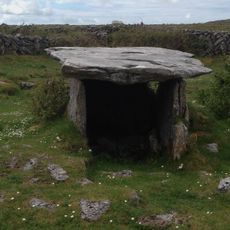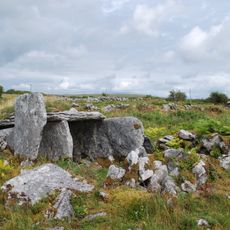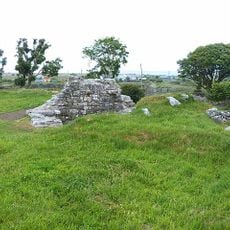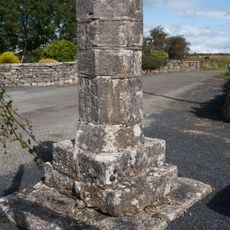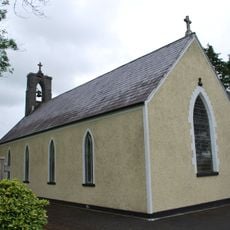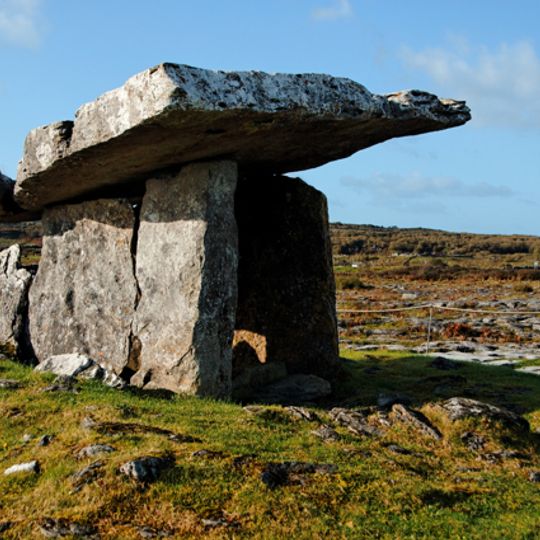
Poulnabrone dolmen, Neolithic burial site in The Burren, Ireland.
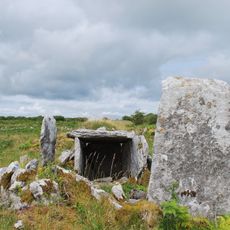
Poulnabrone dolmen is a portal tomb located in the karst landscape of The Burren, built from three tall standing stones that support a massive horizontal capstone approximately four meters long. The structure displays the classic portal-tomb design with defined burial chambers beneath the flat stone cap.
The structure was built between 3800 and 3200 BC and served as a burial site containing the remains of around 33 individuals along with stone tools and bone items. This monument represents one of Europe's oldest sepulchers and documents burial practices from the early Neolithic period.
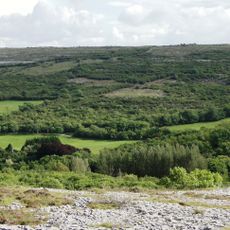
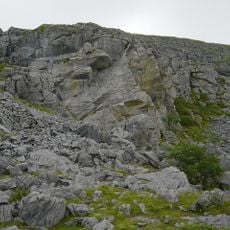
The name comes from the Irish words 'Poll na Brón', meaning 'Hole of the Quernstone', a reference to the limestone terrain of the region. This connection to the harsh, stony landscape becomes apparent when you visit the site.
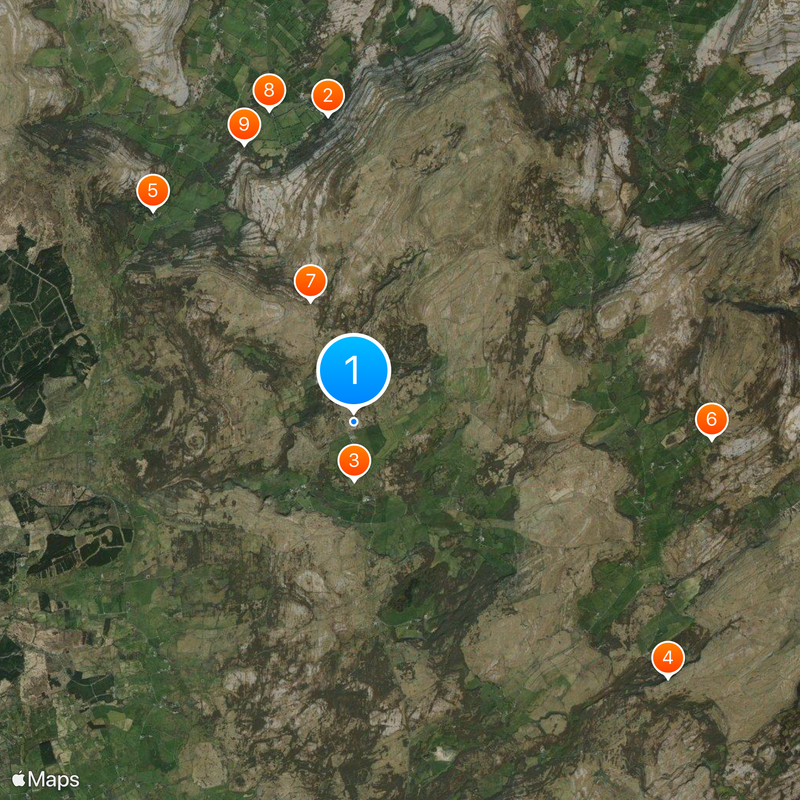
The site is located south of Ballyvaughan near the R480 road with parking available and a roughly 250-meter walking path leading to the monument. The access on foot is straightforward and follows a well-worn trail that leads directly to the stones.
Excavations uncovered the remains of a six-month-old infant showing evidence of Down syndrome, a remarkable medical discovery from the early Neolithic period. This finding represents one of the earliest documented cases of this genetic condition in human history.
The community of curious travelers
AroundUs brings together thousands of curated places, local tips, and hidden gems, enriched daily by 60,000 contributors worldwide.