Phoenix Park, Urban park in Dublin, Ireland
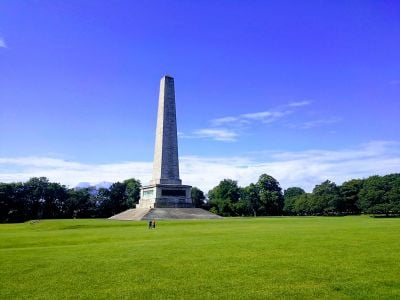
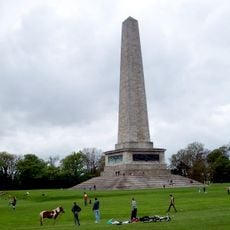
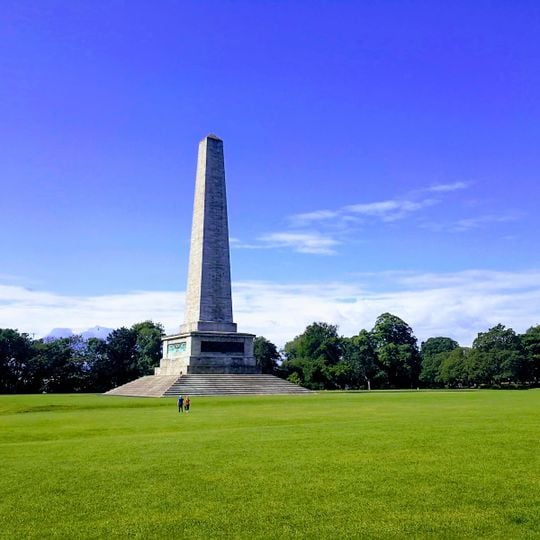
Phoenix Park is a 707-hectare public park enclosed by an 11-kilometre wall, 2–4 km west of Dublin city centre north of the River Liffey. It is mostly grassland and tree-lined avenues, with a herd of wild fallow deer that has lived there since the 17th century. The Wellington Monument, a 62-metre obelisk of light grey ashlar on a stepped base, stands in the grass.
The land belonged to Kilmainham Priory until the Dissolution of the Monasteries, then passed to the Crown. In 1662 the Duke of Ormond turned it into a 2,000-acre hunting park with pheasants and wild deer, walled at a cost of £31,000 by 1669. The Earl of Chesterfield opened it to Dubliners in 1745, and from the 1830s Decimus Burton redesigned its paths and planting.
The name Phoenix Park comes from the Irish 'fionn uisce', meaning clear water, not from the mythical bird. Visitors today see the Papal Cross memorial, where Pope John Paul II celebrated Mass before over a million people in 1979.
Multiple entrances allow access from the city center, with most visitors entering through the Parkgate Street gate. Cycling paths and footpaths cross the grounds, and picnic areas are available throughout.
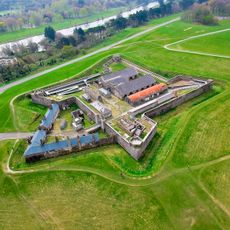
The Magazine Fort, an old military fortress in the park, was raided in 1916 by republican forces who seized weapons. Today the structure stands empty and is closed to the public, but visible from outside.
The community of curious travelers
AroundUs brings together thousands of curated places, local tips, and hidden gems, enriched daily by 92,757 contributors worldwide.