Céide Fields, Neolithic archaeological site in County Mayo, Ireland
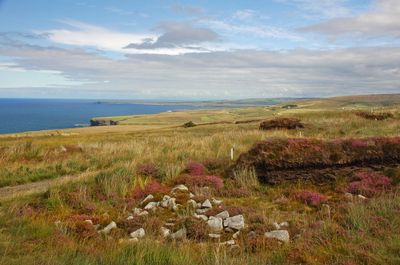
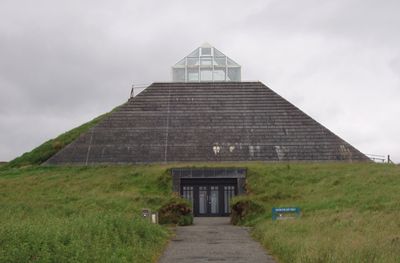
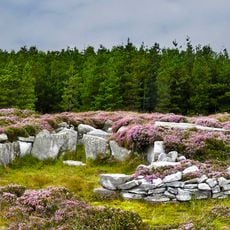
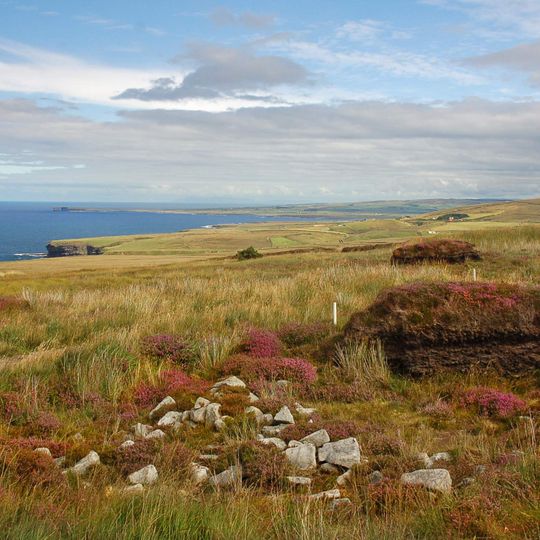
The Céide Fields is a prehistoric landscape of stone-walled fields, enclosures, habitation traces and megalithic monuments preserved beneath blanket bog on the north County Mayo coast. The walls are buried, not visible: over 100 km of them are estimated to lie under the peat, mapped by probing with long T-shaped iron rods. A stepped stone pyramid holding a glass-roofed visitor centre rises from a grassy slope, with a glazed entrance at its base.
A farming community laid out the stone walls roughly five thousand years ago to divide cropland and separate livestock. Over the centuries a layer of peat grew over the fields, hiding the stone pattern until rediscovery.
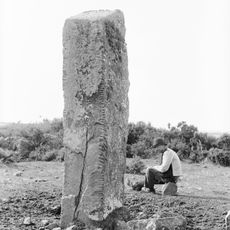
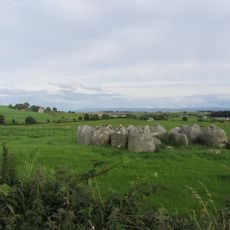
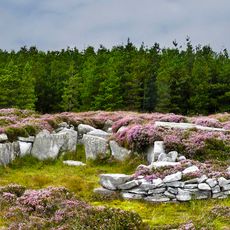
The name comes from the Irish word for flat-topped hills and describes the gentle limestone coastal terrain. Visitors today see remains of dwelling structures and standing megaliths between the excavated stone walls.
The visitor center opens from late April through October and offers guided walks over the excavation grounds. Sturdy footwear helps on the wet paths, and waterproof clothing is advisable because of Atlantic winds.
A teacher discovered the walls while cutting turf in the nineteen thirties and recognized the regular pattern beneath the surface. His son conducted the scientific survey decades later that confirmed the age and extent of the fields.
The community of curious travelers
AroundUs brings together thousands of curated places, local tips, and hidden gems, enriched daily by 92,643 contributors worldwide.