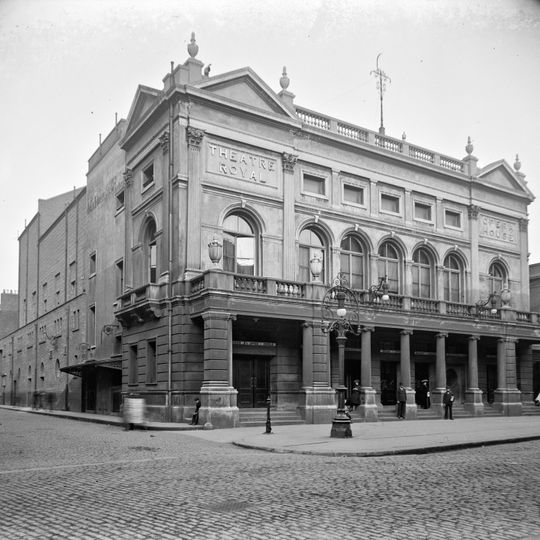
Theatre Royal, Dublin, Historical theatre in Dublin, Ireland.
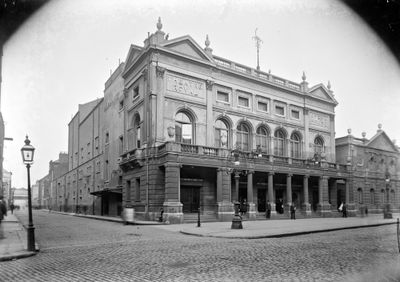
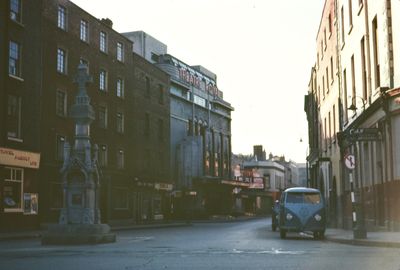
Theatre Royal on Hawkins Street displayed a white marble exterior with black bands and large windows designed in Art Deco style. The interior featured Moorish Atmospheric decoration, a deep stage, a substantial cinema screen, and a Compton organ for musical accompaniment.
The third Theatre Royal opened in January 1821 as the Albany New Theatre, a 2,000-seat house built in Hawkins Street by Henry Harris at a cost of £50,000 to Samuel Beazley's design. After George IV attended a performance in August, a patent was granted and the name changed to Theatre Royal. It burned down on 9 February 1880.
The name "Theatre Royal" marked a theatre holding a royal patent, without which serious drama could not legally be staged. The first patent theatre opened in Smock Alley in 1662; in 1663 Katherine Philips's translation of Corneille's Pompée was performed there, the first English play by a woman on the professional stage.
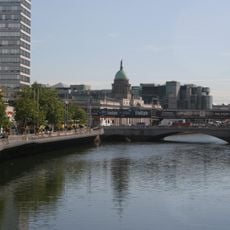
The third Theatre Royal stood on Hawkins Street and burned down on 9 February 1880, so no building from that era survives to be visited. The site lies in Dublin's city centre, a short walk from the River Liffey and Trinity College. The Smock Alley Theatre occupies the former Church of St. Michael and St. Johns, converted in 2012 and home to the Gaiety School of Acting.
The Theatre Royal name covers five different Dublin theatres. The first opened in Smock Alley in 1662; its site later became the Church of St Michael and St John, converted back into a theatre in 2012 after six years of work, now home to the Gaiety School of Acting. The third, in Hawkins Street, opened in 1821 as the Albany New Theatre and burned down on 9 February 1880.
The community of curious travelers
AroundUs brings together thousands of curated places, local tips, and hidden gems, enriched daily by 94,065 contributors worldwide.