Ad Halom, Historical bridge and heritage site in Ashdod, Israel.
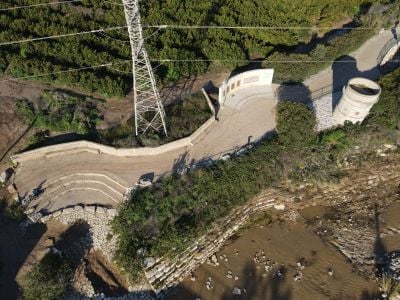
Ad Halom is a heritage site and memorial complex at the eastern edge of Ashdod, featuring three bridges that span the Lakhish River. The grounds contain structures from different periods and function as a junction connecting major transportation routes.
Jisr Isdud was built in the late 19th century by the Ottoman authorities over Wadi Sukrir on the Jaffa–Gaza road, on foundations from the Mamluk and Roman periods. On 11 November 1917 Anzac Division troops took the bridge after the retreating Ottomans sabotaged it, and the British laid a railway bridge beside it. In May 1948 the Givati Brigade blew up the bridge during Operation Barak, and the Egyptian advance north was halted there; the bridge was later rebuilt and restored in 2010.
The Hebrew name Ad Halom means "up to here" or "no further", taken from the northernmost point the Egyptian army reached in May 1948. It was proposed by Chief of Staff Yigal Yadin and became the official name on 31 August 1952, after the planned settlement was never built and the name passed to the bridge. The phrase is now used in Hebrew for a last line of defence.
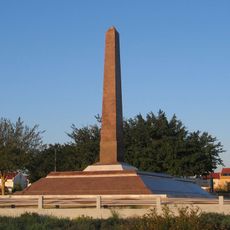
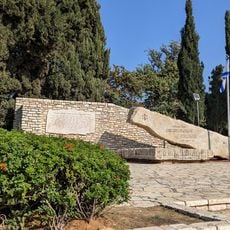
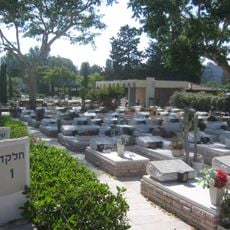
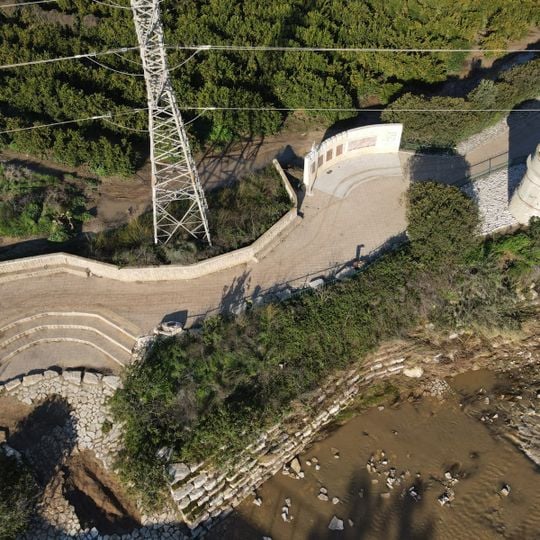
The site lies at the eastern entrance to Ashdod, beside the Ad Halom interchange on Highway 4, and the Ashdod Ad Halom railway station is a short walk away. The memorial park west of the bridges holds the pillbox, the Vickers gun position and the fallen-soldiers memorial wall. The stone-lined channel and paved walkway run past the Ottoman bridge, whose three inscribed panels face the path.
The pillbox near the bridges was one of a series the British Mandate authorities set up after the armed raids of the 1936–1939 Arab revolt. It was built to guard the bridges against sabotage, and it still stands beside the memorial wall in Ad Halom Park.
The community of curious travelers
AroundUs brings together thousands of curated places, local tips, and hidden gems, enriched daily by 94,421 contributors worldwide.