Ashdod-Sea, Medieval castle ruin near Mediterranean coast in Ashdod, Israel
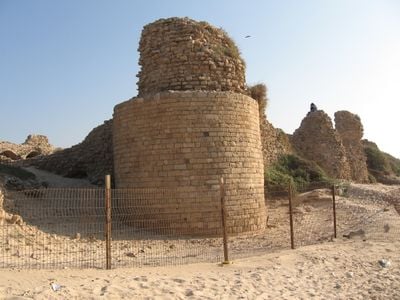
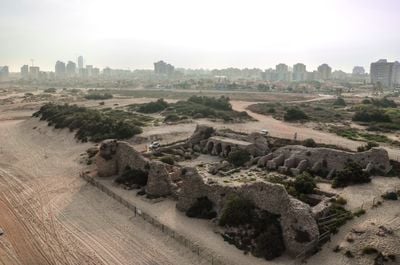
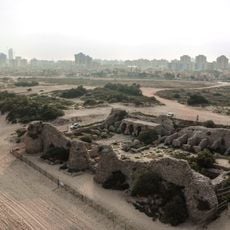
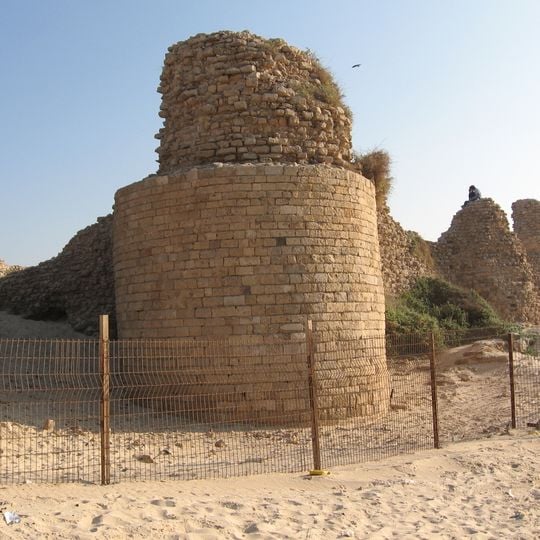
Ashdod-Sea is a fortress ruin on the Mediterranean coast with a central core enclosed by thick walls, several interior rooms with vaulted ceilings, and eight towers positioned around the perimeter. The site also contains remains of residential areas and religious spaces from different periods.
The fortress was built on Byzantine foundations and took its current form through multiple rebuildings between the 7th and 12th centuries by different rulers and cultures. A major earthquake caused significant damage, after which it was reconstructed.
The Arabic name Minat al-Qal'a, "harbour of the fortress", recalls the Umayyad fort built here by Caliph Abd al-Malik as one link in a chain of coastal defences signalling to Ramla. In Crusader hands the site passed to the knight Nicolas de Beroard and was called Castellum Beroart. A 6th-century chancel screen found here attests a Jewish community in the Byzantine port town.
Access to the ruins is straightforward, though the ground is uneven and some areas require caution. The best time to visit is early in the day or on cloudy days, as the sun on the exposed site becomes very hot without shade.
The fort's Arabic name, Minat al-Qal'a, means "harbour of the fortress". It was built by the Umayyad caliph Abd al-Malik in the 7th century as one link in a chain of coastal defences meant to warn Ramla of Byzantine ships. The fort measured about 35 by 55 metres and was later remodelled by the Fatimids and Crusaders.
The community of curious travelers
AroundUs brings together thousands of curated places, local tips, and hidden gems, enriched daily by 92,729 contributors worldwide.