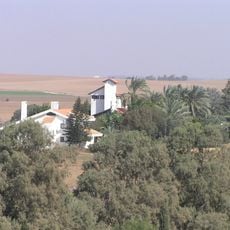
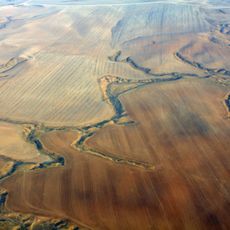
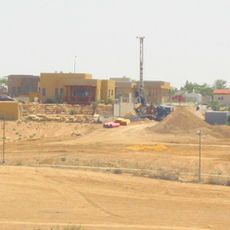
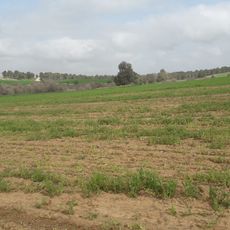
Tel esh-Sharia, Archaeological site in Negev, Israel.
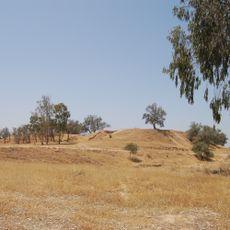
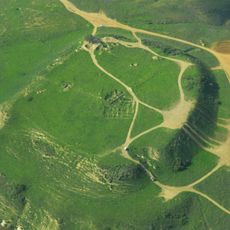
Tel esh-Sharia is a 20-dunam archaeological mound on a kurkar hill rising to 169 m, on the north bank of Nahal Gerar southeast of Netivot. Excavations in 1972–1979 uncovered 13 occupation layers, from the Chalcolithic through the Late Bronze Age and the united Israelite kingdom to the Byzantine period. Finds include Persian-period granaries, a palace attributed to King Asa of Judah, and a large Roman building; a Muslim cemetery lies on the summit.
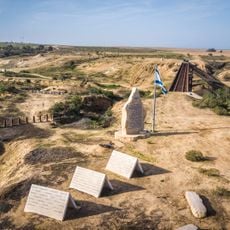
Excavations by Ben-Gurion University under A. Oren between 1972 and 1979 uncovered 13 occupation layers, from the Chalcolithic through the Late Bronze Age, the United Monarchy and the Byzantine period. Finds include Persian-period granaries, a palace attributed to King Asa of Judah, and a large Roman building. In November 1917 the mound anchored the Ottoman Gaza–Hebron defence line; British divisions took it on 6–7 November.
The Arabic name of the mound and the wadi below it, al-Shari'a, means "law" or "judgment" in Arabic. Moshe Garsiel argued in June 2020 that this name preserves the law King David set for dividing war spoils between those who stayed behind and those who fought the Amalekites who raided Ziklag (1 Samuel 30:18–25). A Muslim cemetery lies on the summit.
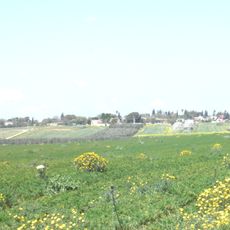
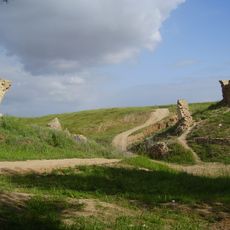
The mound sits elevated in open desert landscape and is relatively easy to spot from a distance, but the area is dry with little shade available. Bring water, sun protection, and sturdy footwear since you will walk over uneven ground and climb over scattered remains.
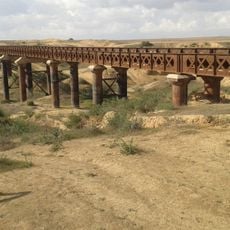
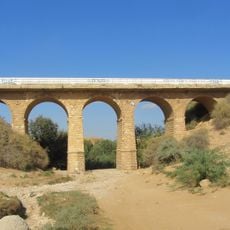
The Ottoman army dug a trench west of the mound and built a seven-arch bridge over Nahal Gerar for the railway from Nahal Sorek to Kusseima, with a station south of the river. The Turks blew up part of the bridge during their retreat in November 1917; the British repaired it. Dense vegetation now blocks the streambed, but the embankment and trench remain visible.
The community of curious travelers
AroundUs brings together thousands of curated places, local tips, and hidden gems, enriched daily by 92,750 contributors worldwide.