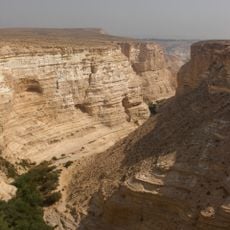
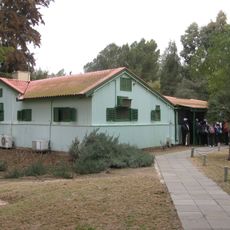
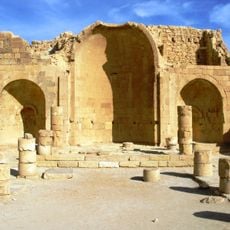
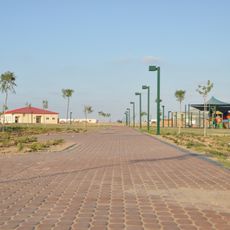
Nitzana, Archaeological site in Negev Desert, Israel.
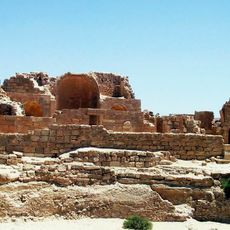
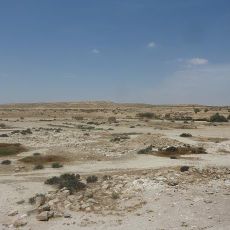
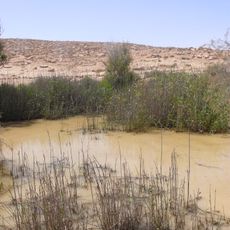
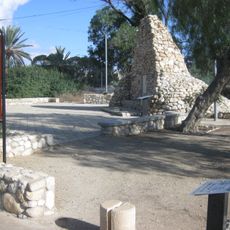
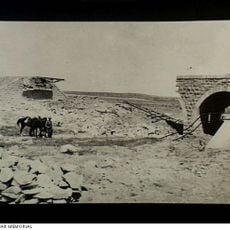
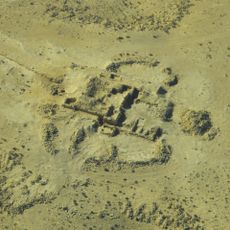
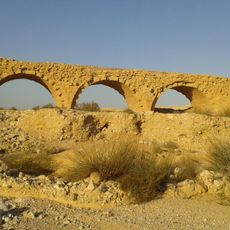
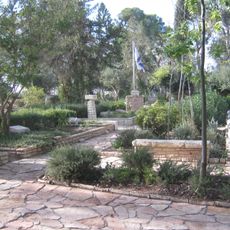
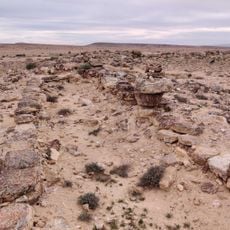
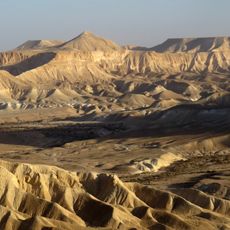
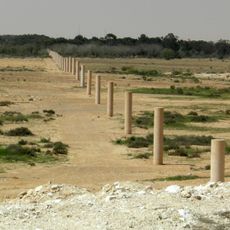
Nitzana is an archaeological site on a plain in the western Negev, 250 m above sea level, with a natural hill rising about 35 m above its surroundings. Its remains include a rectangular Byzantine fortress (85 by 35 m) with five square towers, five churches, and a cemetery. The site is crossed by the Ezuz stream and bordered by the Nitzana stream.
Nitzana emerged in the 2nd century BCE at a junction of trade routes to Sinai, Egypt, and the Judean hills. After the Nabataean kingdom was annexed by Rome in 106 CE, it declined, with almost no finds from the 3rd–4th centuries. At the end of the 4th century, under Theodosius I, a Roman fortress was built and the town revived as an imperial center. It flourished through the Byzantine and early Islamic periods, but heavy taxation after the Arab conquest led to its abandonment in the 9th century.
The Nessana papyri, found in 1935–1937 in the Church of Saints Sergius and Bacchus, are mostly Greek, with Latin and Arabic pieces, and date from the mid-5th to the late 7th century. They record tax documents, soldiers, farmers and pilgrims, and include copies of Virgil's Aeneid with a Latin-Greek glossary used for learning Latin.
The site is accessible via Route 211 from Telalim Junction and offers parking for visitors. The grounds remain open throughout the day, allowing you to explore the ruins and remains from different angles at your own pace.
The papyri found in the Church of Saints Sergius and Bacchus include copies of books II–IV of the Aeneid with a Latin-Greek glossary, showing Latin was studied here. The archive also holds a full correspondence between Abgar of Edessa and Jesus of Nazareth.
The community of curious travelers
AroundUs brings together thousands of curated places, local tips, and hidden gems, enriched daily by 92,635 contributors worldwide.