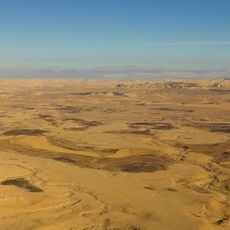
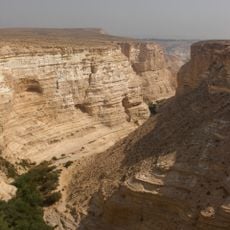
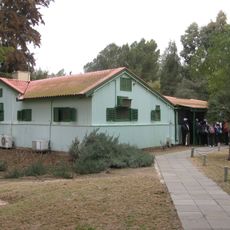
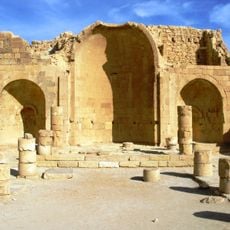
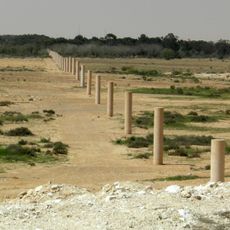
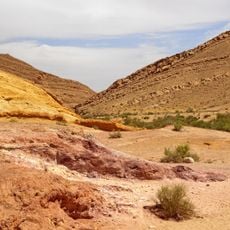
חרותות סלע בהר הנגב המרכזי, Ancient petroglyphs in Central Negev Mountains, Israel.
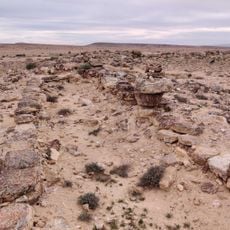
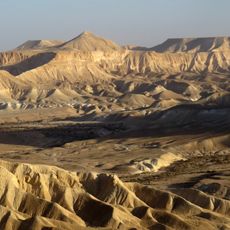
These rock engravings in the Central Negev Mountains display animals, human figures, and geometric designs carved into stone surfaces. They are scattered across multiple rocky formations throughout this mountainous desert region.
The engravings were incised over thousands of years on light limestone coated with dark patina. Inscriptions in Thamudic, Nabataean and early Arabic date from the 2nd century BCE to the 11th century CE, with Roman-period and 5th-century Aramaic texts. Bedouin wasms, geometric tribal boundary marks, were added in the 18th and 19th centuries after Ottoman land reforms.
The carvings reveal how ancient desert dwellers perceived their surroundings and the animals they shared the land with. Visitors can observe the direct connection between these early communities and the wildlife around them.
Visitors should wear sturdy hiking shoes and bring plenty of water, as the terrain is rocky and demanding. The paths are marked, but careful footing is essential to stay safe while exploring.
The dark patina that coats the pale limestone lets experts judge relative age: freshly pecked areas show bright, and older carvings darken again as the patina regrows. Look for wasm inscriptions from the 18th and 19th centuries, made by local Bedouin to mark tribal or family land boundaries after an Ottoman land reform.
The community of curious travelers
AroundUs brings together thousands of curated places, local tips, and hidden gems, enriched daily by 94,225 contributors worldwide.