Cave of Letters, Archaeological cave in Judean Desert, Israel
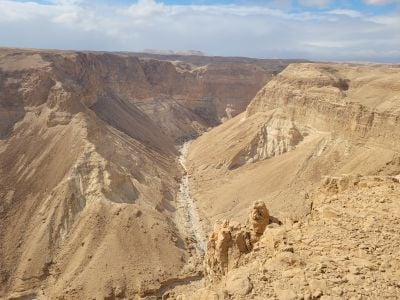
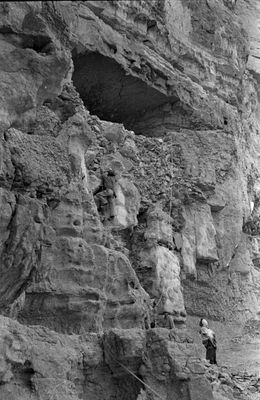
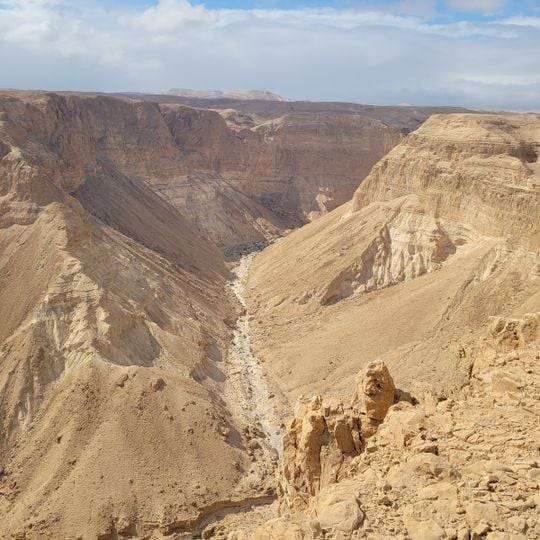
The Cave of Letters is a karst cave in Nahal Hever with two openings in the cliff face of the waterfall's horseshoe, about 200 meters above the streambed. Its three large halls, linked by passages, cover roughly 270 square meters and reach over 100 meters deep. The entrance requires a 7-meter vertical climb.
Bedouin of the Ta'amireh tribe found the cave, and Yohanan Aharoni explored it in 1953 and 1955, spotting Roman siege camps above and across the ravine. Yigael Yadin's 1960-61 excavation, supported by the army and a helicopter, recovered the Bar Kokhba letters. After the revolt's failure in autumn 135 CE, Jews from En-Gedi, including the family of commander Yehonathan ben Be'ayan, fled here and died under siege.
The cave's name comes from the Bar Kokhba letters found inside a waterskin beside wool, beads, a mirror and a perfume flask, likely a woman's belongings. Twelve letters from Shimeon bar Kosiba to Yehonathan and Masabala at En-Gedi order arrests and the confiscation of wheat and spice fields. One Greek letter asks for the four species for Sukkot, written by Soumaios because no one knew Hebrew or Aramaic.
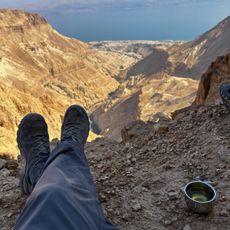
Visiting requires physical preparation and climbing gear, as the cave sits on steep cliff walls. A permit from the Israel Antiquities Authority is needed for access, and hiring an experienced guide is strongly advised.
The bronze cache found in the cave included incense shovels and bowls bearing Roman mythological figures, among them the nymph Thetis; the faces of the pagan gods had been deliberately defaced. Yigael Yadin argued the vessels were looted from the Romans, while Richard Freund later claimed they belonged to Herod's Temple.
The community of curious travelers
AroundUs brings together thousands of curated places, local tips, and hidden gems, enriched daily by 92,643 contributors worldwide.