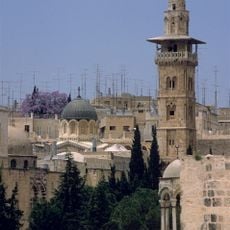
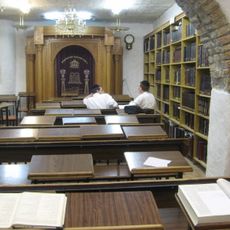
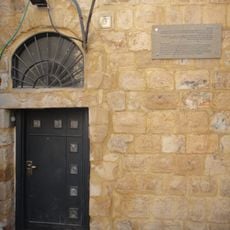
Church of Our Lady of the Spasm, Jerusalem, Armenian Catholic church at Via Dolorosa, Jerusalem
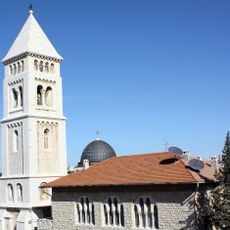
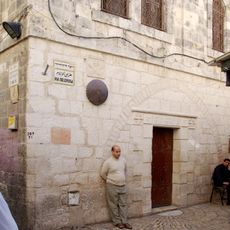
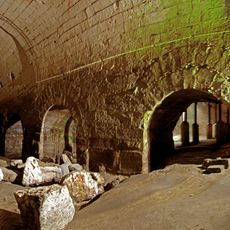
The Church of Our Lady of the Spasm is an Armenian Catholic church built in 1881 at the fourth station of the Via Dolorosa, across from the Austrian Hospice. It is a cross-shaped Levantine Neo-Byzantine building with a central dome. A high relief on the entrance door by Thaddäus Zielinsky shows the meeting of mother and son. The crypt, reached from a side chapel, has a square plan with a column-supported dome and three apses.
The church was built in 1881 as an Armenian Catholic place of worship. It marks the fourth station on Via Dolorosa, where tradition says Jesus met his mother Mary during his walk to crucifixion.
The name Spasm refers to Mary's fainting, a scene not found in the Bible but located here or beneath the cross. The crypt mosaic shows footprints attributed to Mary, and the chapel of Our Lady of the Spasm was added in the 20th century.
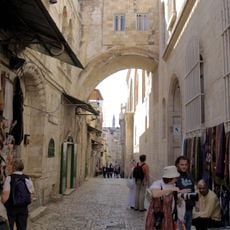
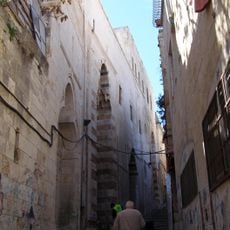
The church stands at the fourth station of the Via Dolorosa in the Muslim Quarter, across from the Austrian Hospice and near the Ecce Homo Arch. The entrance to the crypt, with its 4th–6th-century floor mosaic, is in a side chapel of the upper church. The complex also runs an Armenian hospice.
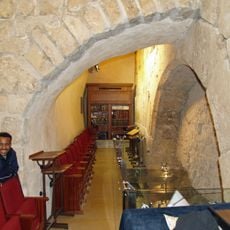
In the crypt, a floor mosaic from the 4th to 6th century shows footprints attributed to Mary; its sacred origin is not certain, but it may come from the Byzantine Church of Holy Wisdom. The crypt keeps the Crusader-era plan: a square room with a column-supported dome and three apses, reached by stairs from a side chapel of the upper church.
The community of curious travelers
AroundUs brings together thousands of curated places, local tips, and hidden gems, enriched daily by 92,633 contributors worldwide.