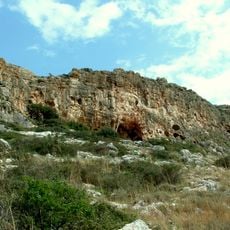
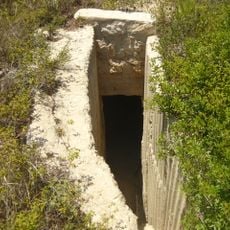
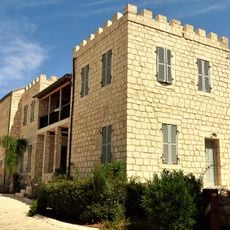
Nahal Oren, Archaeological site on Mount Carmel, Israel
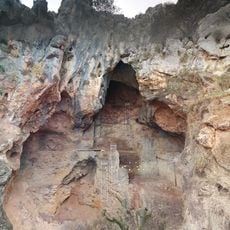
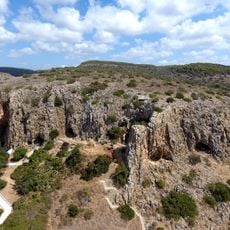
Nahal Oren is an archaeological site on the northern bank of the Nahal Oren wadi on Mount Carmel, 10 km south of Haifa. It consists of a cave and a small terrace in front of it that descends steeply to the wadi floor. Excavations have uncovered Kebaran, Natufian and Pre-Pottery Neolithic A and B remains.
The site was first excavated in 1941; Moshe Stekelis directed campaigns from 1942 and again from 1954 to 1960 with Tamar Yzraely-Noy, and from 1969 to 1970 with Eric Higgs and Anthony Legge. Flint tools from the Middle Paleolithic, 80,000 to 40,000 BCE, were found in the cave, while work on the terrace uncovered nine levels from Kebaran, Natufian and Pre-Pottery Neolithic A and B occupations.
The name Nahal Oren means 'Pine Stream' in Hebrew, while Arabic speakers call the wadi Wadi Fallah. The PPNA village consisted of about 13 subcircular houses on four artificial terraces, compared to PPNA Jericho. A single burial there lacked grave goods and its skull had been removed, an early example of a practice more common later in the Neolithic.
The cave lies buried under landslides, so the excavated area is the terrace in front of it, about 400 m² cut into four artificial terraces that descend steeply toward the wadi floor. The site sits on the northern bank of Nahal Oren, roughly 10 km south of Haifa on Mount Carmel. Excavations under Moshe Stekelis began in 1942 and continued in campaigns from 1954 to 1960 and 1969 to 1970.
In 1985, three spikelets of cultivated emmer wheat found in a Kebaran context at Wadi Oren were judged so early that researchers treated them as an anomaly. The site also yielded a PPNA burial pit with no grave goods and a skeleton complete except for the removed skull.
The community of curious travelers
AroundUs brings together thousands of curated places, local tips, and hidden gems, enriched daily by 93,885 contributors worldwide.