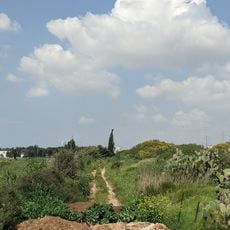
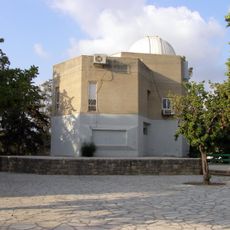
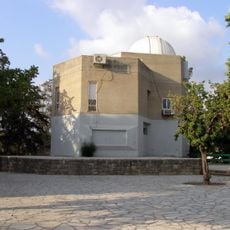
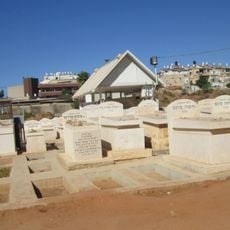
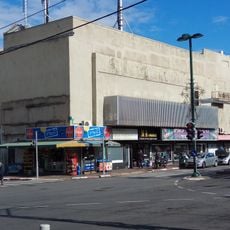
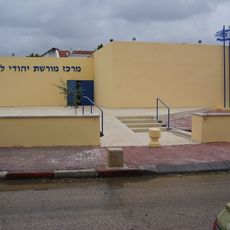
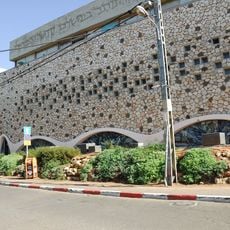
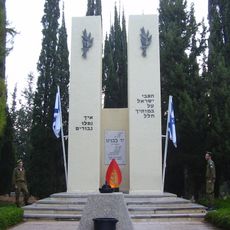
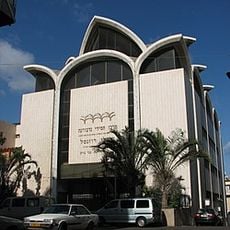
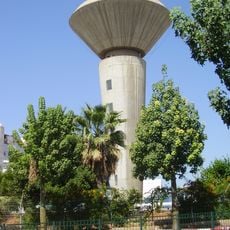
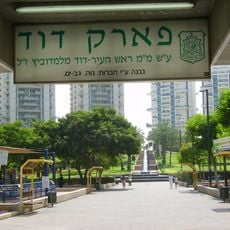
Tel Litvinsky, Heritage site and moshava in Ramat Gan, Israel.
Tel Litvinsky is a former moshava founded in 1934, now part of Ramat Gan. Planned by Richard Kauffman as a garden city of 2,000 plots on 1,700 dunams, it had only 24 families on one street by 1936. Most of its land was requisitioned by the British for a military camp, and later the site became Tel HaShomer.
Founded in 1934 by brothers Emil and Moshe Litvinsky with financial help from Baron Felix de Menashe, who bought 1,700 dunams from the residents of Sakia. The colony was named after their father Jacob Elhanan, a founder of Tel Aviv, and planned by Richard Kauffman as a garden city of 2,000 plots. By 1936 only 24 families, mostly German immigrants, lived on a single street. In 1961 the area was annexed to Ramat Gan.
The settlement's first residents, until 1936, were 24 families living on a single street, most of them immigrants from Germany. To make the isolated colony more attractive, the Litvinsky family ran a private bus line, the "Litvinsky Service", linking it to Tel Aviv. The name honours the brothers' father, Jacob Elhanan, a founder of Tel Aviv.
The Litvinsky brothers' garden-city plots were laid out by Richard Kauffman along a single street, and until 1936 only 24 families lived there. The area was annexed to Ramat Gan in 1961, so orientation follows that city's streets; the hospital complex and Kiryat Krinitzi neighbourhood lie within the former settlement lands.
In spring 1943 the US Army linked the Tel Litvinsky camp to the British RAF airfield at Lydda with a 13 km railway from Kfar Jinnis station through Yehud, serving two American squadrons based at the airfield. The line was later used by the IDF to evacuate wounded in the 1948 war.
The community of curious travelers
AroundUs brings together thousands of curated places, local tips, and hidden gems, enriched daily by 94,499 contributors worldwide.