Khirbet Za'ak, Archaeological site in Southern District, Israel
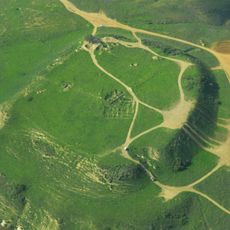
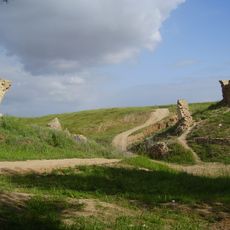
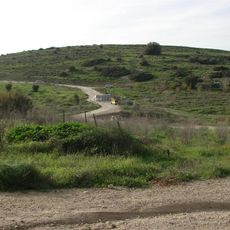
Khirbet Za'ak is an archaeological site on a hill 420 m above sea level north of Kibbutz Lahav, on the border between the southern Hebron hills and the Judaean lowlands. About 30 dwelling units remain, each with a one- or two-room stone house linked to caves, a walled courtyard and a water cistern cut into the soft chalk. A Byzantine-era oil press with a crushing stone and storage jars was excavated in one unit.
Khirbet Za'ak's earliest remains date to the Middle Bronze Age II (18th–16th centuries BCE), when a burial cave was cut. Most caves belong to Iron Age II (9th–6th centuries BCE) and were reused in the Roman and Byzantine periods. The main finds are late Roman and Byzantine: about 30 dwelling units, each with a one- or two-room building linked to caves, a walled courtyard and a cistern. A Byzantine olive press and hiding caves attributed to the Bar Kokhba revolt were excavated.
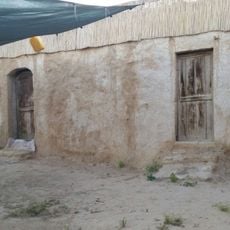
The Arabic name Khirbet Za'ak comes from the salty water of Bir Za'ak, the well at the foot of the hill, which Victor Guérin in 1870 translated as "the well of brackish water." From the 19th century the site served as a seasonal farming settlement (mazra'a) for people from the village of Dura, who repaired the ancient water systems and built stone houses; only the mukhtar's house still stands, in the upper part of the village.
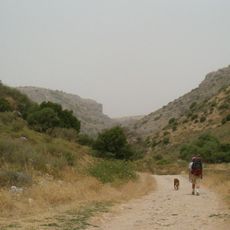
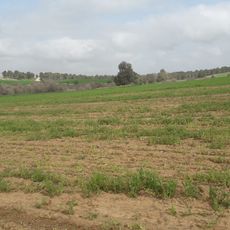
The site lies on a hill of soft chalk capped with nari rock, so the ground is uneven and the burial caves and hiding tunnels are unlit; bring a torch and sturdy shoes. The large well, Bir Za'ak, sits at the foot of the ruin and its slightly salty water is fit only for animals. The area is grazed and farmed by Kibbutz Lahav, which has held the land since 1952.
The large well, Bir Za'ak, sits at the foot of the ruin; its opening is about 4 metres wide and it yields water all year despite being shallow. Its slightly salty water was fit only for watering animals, and traces of a cattle pen were identified around it.
The community of curious travelers
AroundUs brings together thousands of curated places, local tips, and hidden gems, enriched daily by 93,824 contributors worldwide.