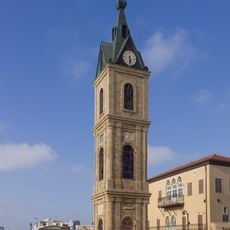
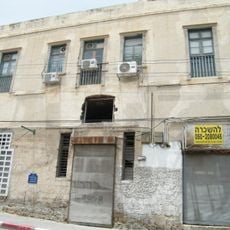
Siksik Mosque, Ottoman mosque in Jaffa, Israel
The Siksik Mosque is a mosque in the Old City of Jaffa, founded in the 1880s by Hajj Abd al-Qadir al-Siksik on the Siksik family's orchard along the Jaffa–Jerusalem road. It is the second mosque built outside the city walls. Its public fountain, the Sabil Siksik, copies the style of the Mahmudi fountain at the nearby Mahmoudiya Mosque, with a double-pointed arch and a 120 by 100 cm inscription slab bearing the tughra of Sultan Abdul Hamid II.
The Siksik Mosque was built in the 1880s by the Siksik family on the land of their orchard along the Jaffa–Jerusalem road, with Hajj Abd al-Qadir al-Siksik named by Mahmoud Yazbak as its principal founder. It was the second mosque built outside Jaffa's city walls. Worship ceased in 1919; in 1948 the courtyard and part of the prayer hall became a café, the building was confiscated in 1965, and it later housed a plastics factory and a Bulgarian Jewish club on the upper floor. It was renovated and reopened for prayer in 2009.
The mosque serves as a gathering place for worshippers and reflects the Muslim presence in this historic area of the city. Its courtyard and surroundings show how religious life continues in the neighborhood today.
The mosque stands in the Old City of Jaffa, on the road that once led from Jaffa to Jerusalem. It is a working place of worship again since 2009, so visitors should time their look at the courtyard and sebil around prayer times and dress modestly. The sebil faces the street and can be seen from outside.
The mosque's sebil carries the same name as the mosque and copies the style of the Mahmudi fountain at the nearby Mahmoudiya Mosque. Its inscription slab, 120 by 100 centimetres, sits in the top middle field of the front wall, held by iron hooks, with the tughra of Sultan Abdul Hamid II above five lines of text.
The community of curious travelers
AroundUs brings together thousands of curated places, local tips, and hidden gems, enriched daily by 92,716 contributors worldwide.