Mahmoudiya Mosque, Ottoman mosque in Jaffa, Israel
Mahmoudiya Mosque is the largest mosque in Jaffa, in the northeast corner of Old Jaffa. Its buildings, gates and three courtyards were built in stages during the 18th and 19th centuries. The western main courtyard leads to a rectangular prayer hall covered by two shallow domes, and a slender minaret with two balconies stands at its southwest corner.
The mosque was first built in 1730 on the orders of Sheikh Muhammad al-Khalili. In 1812 Muhammad Abu-Nabbut, Ottoman governor of Gaza and Jaffa, rebuilt most of it, adding the western courtyard, the prayer hall with two shallow domes and the minaret. It stands on the foundations of a smaller mosque of the Bibi family, and its walls reuse Roman columns from Caesarea and Ashkelon.
The mosque is named after Mahmoud, son of Muhammad Aga al-Shami, who died while his father was rebuilding the mosque in 1812–1814. The complex has two prayer halls, each with its own mihrab facing south. The eastern gate, called the Gate of the Governors, has a Byzantine rosette above its arch and an Ottoman crescent and star on the entablature.
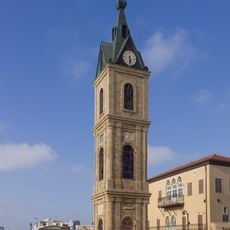
The main entrance is on the south side, marked by an inscription giving the year 1227 AH (1812). A second gate, the "gate of the governors", opens east toward the clock-tower plaza. The Sabil Sulayman is set into the southern wall. The mosque is active, so visits fit around prayer times.
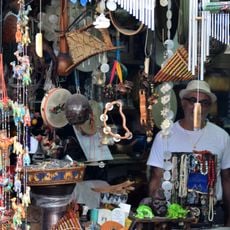
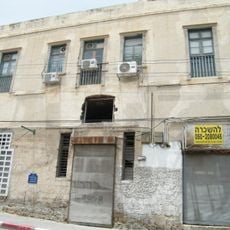
The minaret and domes are clearly visible above the rooftops even though the outer walls of the mosque are almost entirely hidden behind shops that have grown up against them over time. This close mix of a place of prayer and market life in the same structure is rare to see anywhere.
The community of curious travelers
AroundUs brings together thousands of curated places, local tips, and hidden gems, enriched daily by 92,672 contributors worldwide.