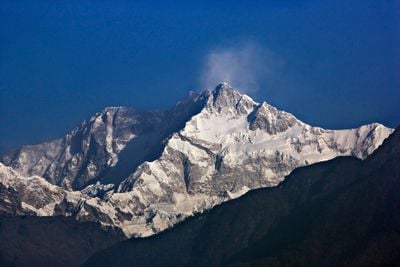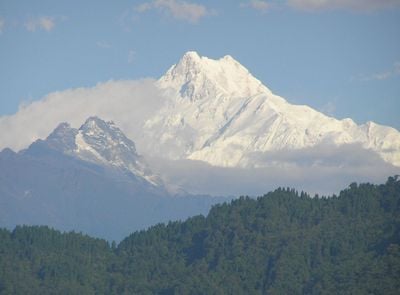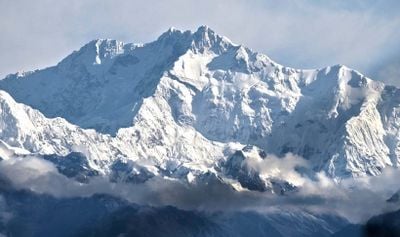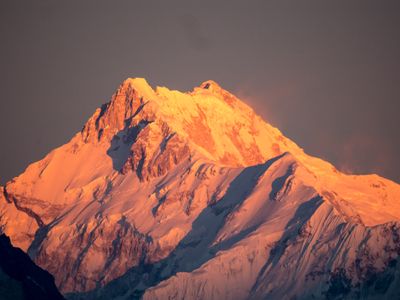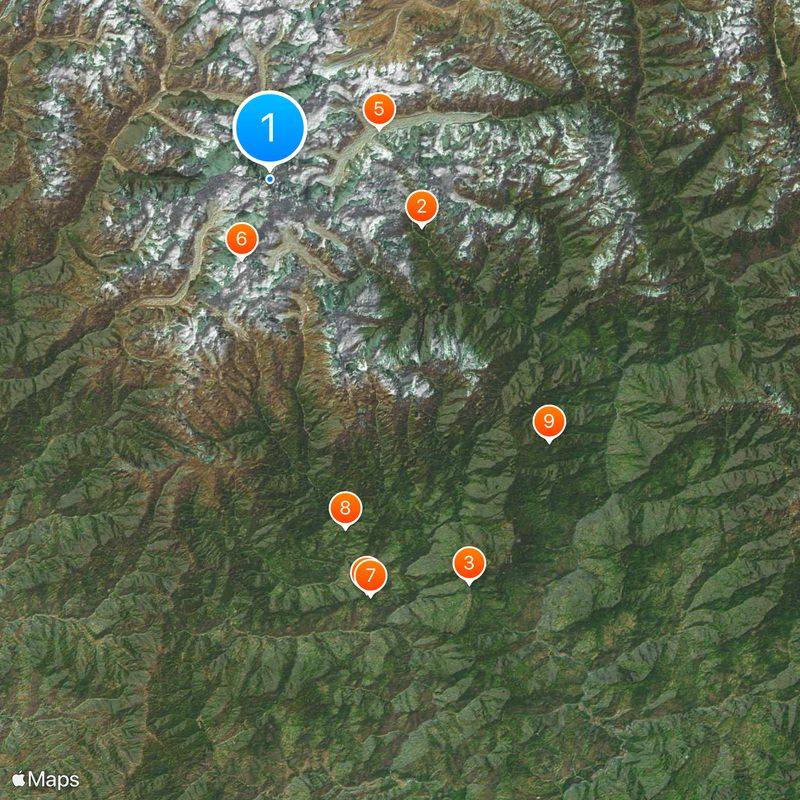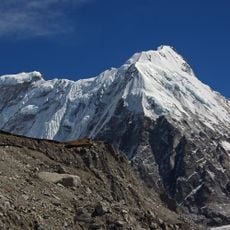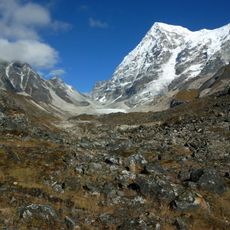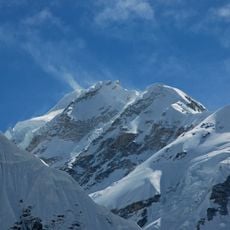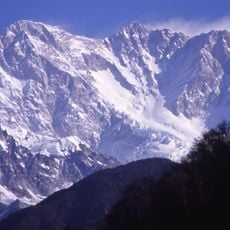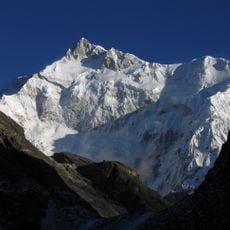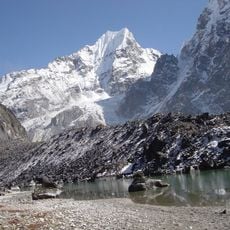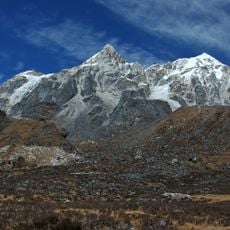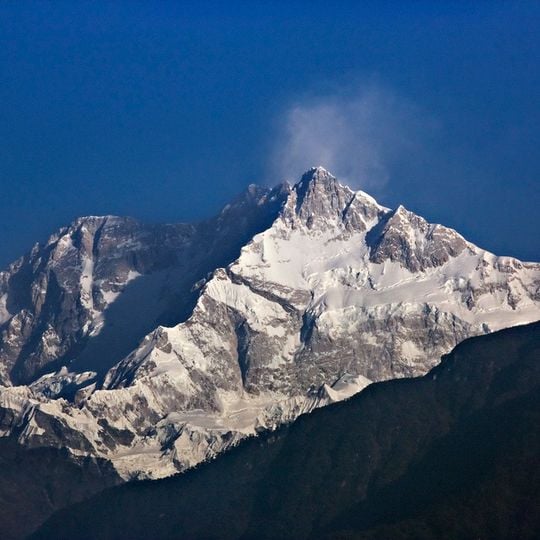
Kanchenjunga, Mountain peak between Taplejung District, Nepal and Sikkim, India
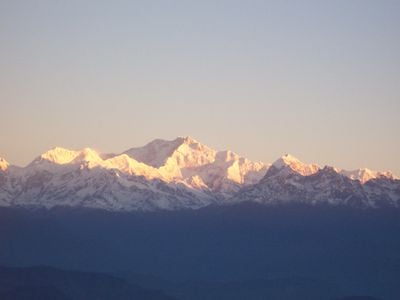
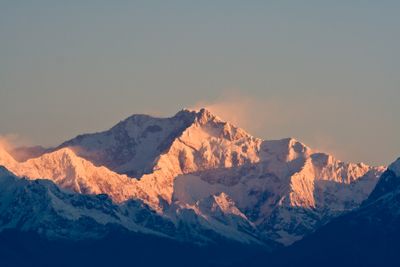
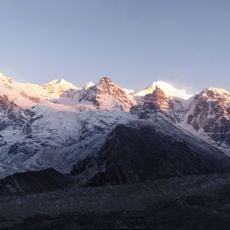
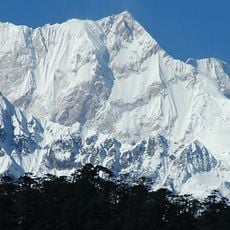
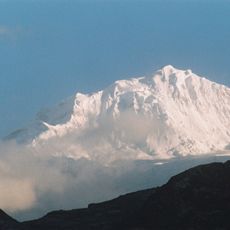
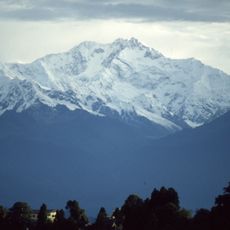
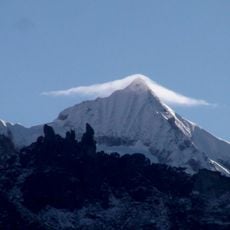
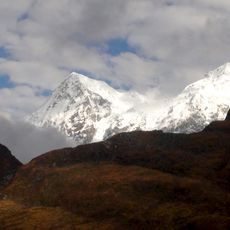
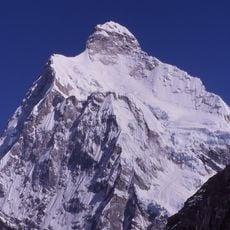
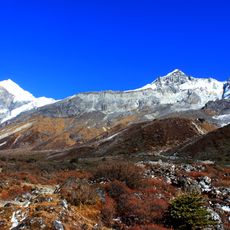
Kanchenjunga rises 8,586 meters (28,169 feet) above sea level and shows three main summits visible from both Nepal and India. The flanks consist of steep limestone formations with glacial valleys running down between them into the lower reaches.
This peak held the title of highest in the world until 1852, when the Great Trigonometrical Survey of India established that Mount Everest exceeded it. The first ascent took place in 1955 by a British expedition that stopped a few meters below the summit out of respect for local religious beliefs.
The name means "five treasures of the high snow" in the Tibetan language and refers to separate summits that people in the surrounding valleys treat as sacred sites. In villages near the base, residents still perform rituals to honor the spirits they believe inhabit the upper slopes.
Climbers reach the summit through routes on the Nepali side, as India does not permit ascents from its territory. Preparation requires specialized gear and several weeks of acclimatization in high camps to adjust the body to the extreme altitude.
The first successful climbers in 1955 stopped a few meters before the actual summit to respect the religious beliefs of local people. Many later expeditions adopted this practice and also refrain from touching the highest point, preserving the spiritual character of the site.
The community of curious travelers
AroundUs brings together thousands of curated places, local tips, and hidden gems, enriched daily by 90,851 contributors worldwide.