Chhatrapati Shivaji Maharaj Terminus, Railway terminus in Fort district, Mumbai, India
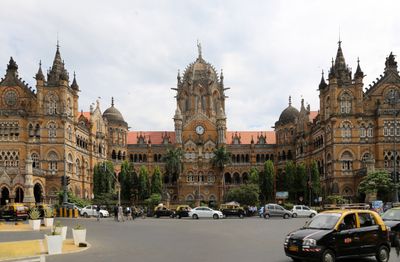
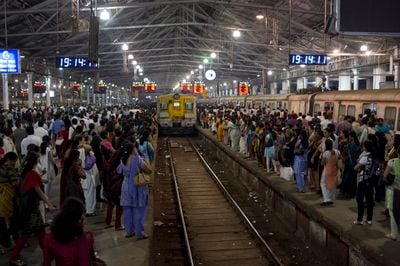
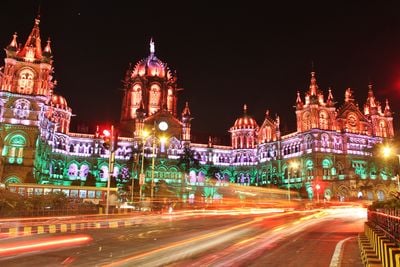
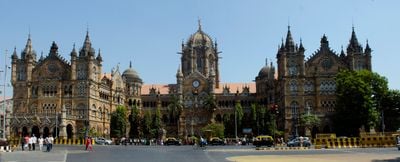
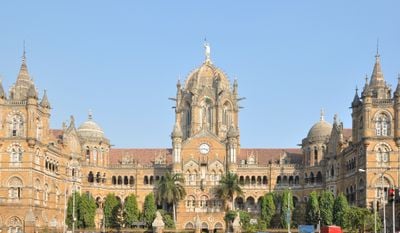
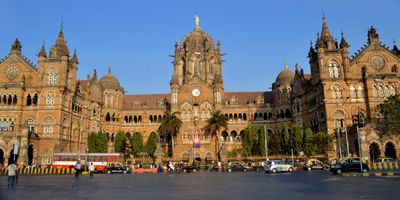
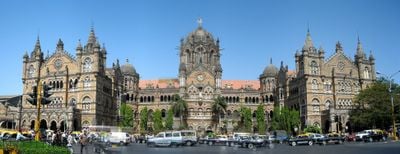
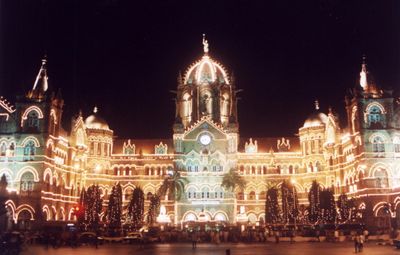
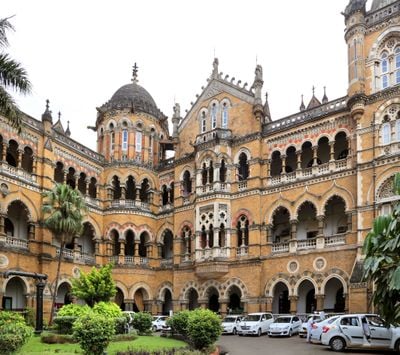
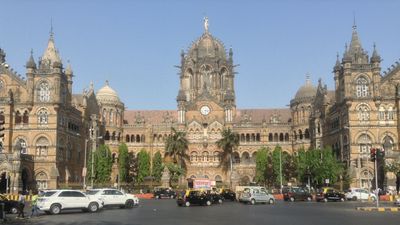
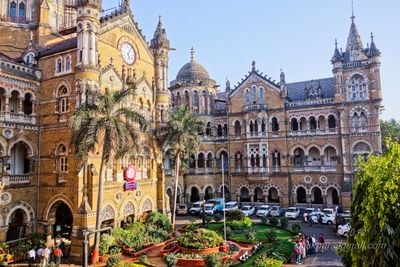
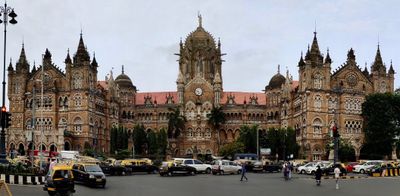
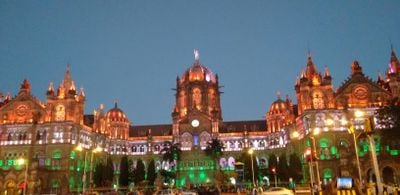
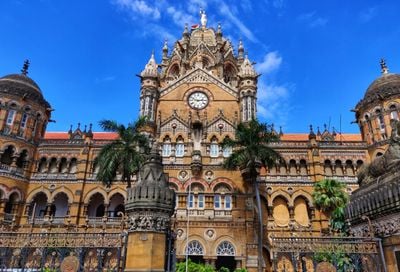
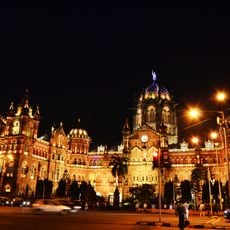
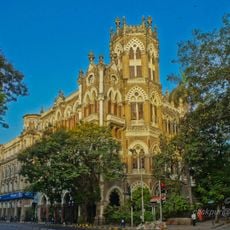
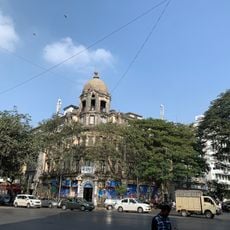
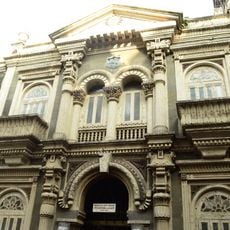
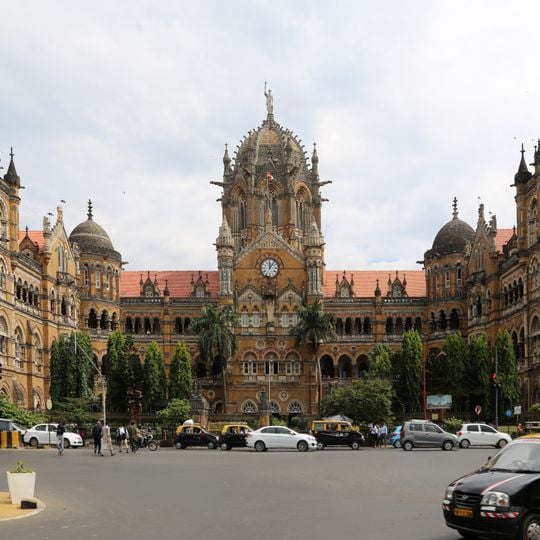
The Indo-Saracenic structure spans an entire city block with a massive sandstone facade combining pointed arches, turrets and a central dome. Stone carvings featuring floral patterns and geometric designs adorn exterior walls and entrances. The main building features high ceilings with wooden beams, stained glass windows and marble staircases leading to various levels. Platforms extend behind the main hall, connecting suburban trains with long-distance services beneath an expansive iron and glass roof structure.
The British colonial administration commissioned Frederick William Stevens to design a new terminus for the Great Indian Peninsula Railway in 1878. Construction took ten years, with completion timed for Queen Victoria's Golden Jubilee in 1888. Axel Haig contributed architectural drawings while Indian stonemasons and craftsmen executed the decorative elements. Originally named Victoria Terminus, it was renamed in 1996 to honor the Maratha warrior Shivaji. UNESCO granted it World Heritage status in 2004.
The station stands as a symbol of Mumbai's colonial past while remaining an active hub for millions of commuters who pass through its halls daily. Its architecture bridges Western Gothic with traditional Indian elements, demonstrating the cultural fusion of the era. Local craftsmen created elaborate stonework, statues and decorative details that showcase regional artistic traditions. The building shapes the identity of the Fort district and serves as a meeting point and landmark for residents and visitors alike.
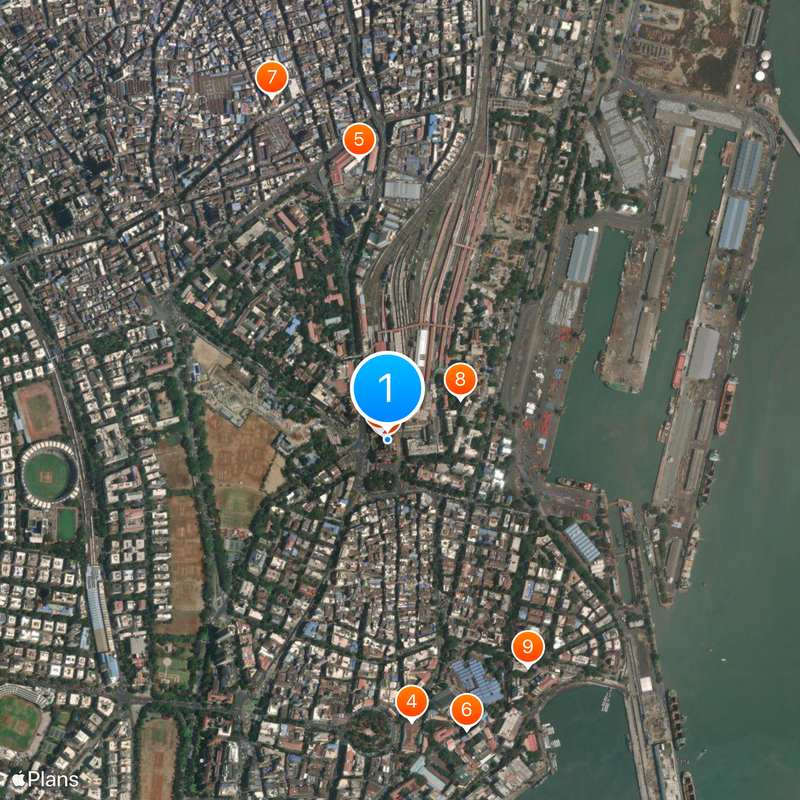
The station sits in the Fort district and is accessible through multiple bus routes, taxis and the Chhatrapati Shivaji Maharaj Terminus metro station. The main hall is open to visitors daily, with early morning or late evening hours offering less crowded conditions. Luggage storage, waiting areas and refreshment stalls are located in various sections of the terminal. Photography is permitted in exterior and hall areas but not on platforms without authorization. Allow at least 45 minutes to view the architectural details.
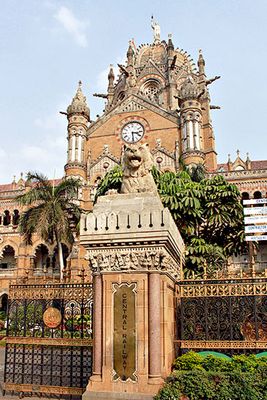
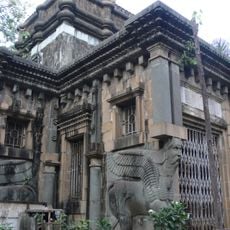
A sculpture named Progress sits atop the central dome, depicting a female figure holding a flaming torch representing technological advancement. The ten stone medallions on the front facade show portraits of engineers, architects and administrative officials involved in the Indian railway system. Lion and tiger figures flank the main portal, representing British and Indian identities. The building contains over sixty offices originally used for railway administrative tasks that now serve various operational functions.
The community of curious travelers
AroundUs brings together thousands of curated places, local tips, and hidden gems, enriched daily by 90,737 contributors worldwide.