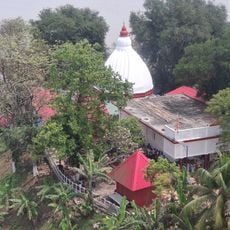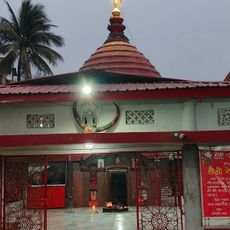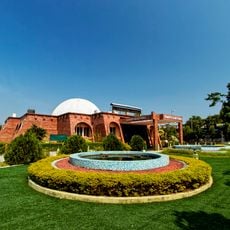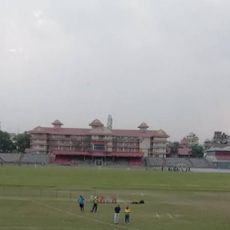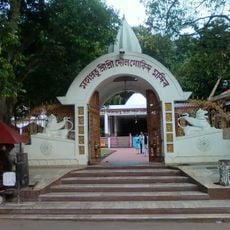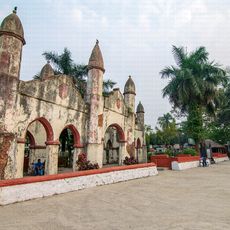
Kamakhya Temple, Hindu temple on Nilachal Hill in Kamrup, India.
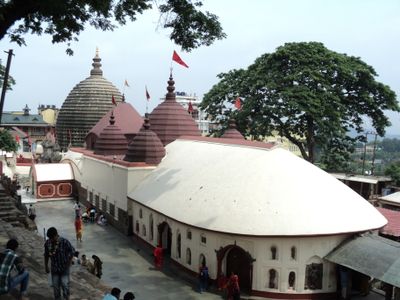
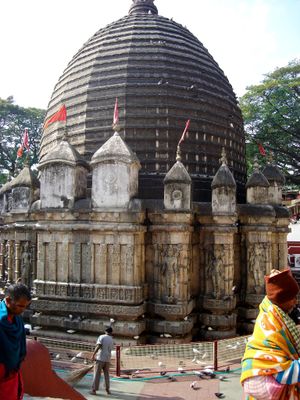
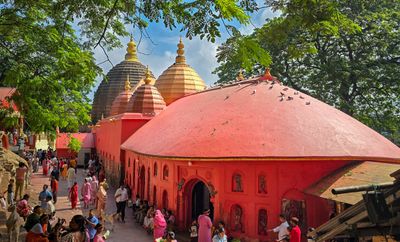
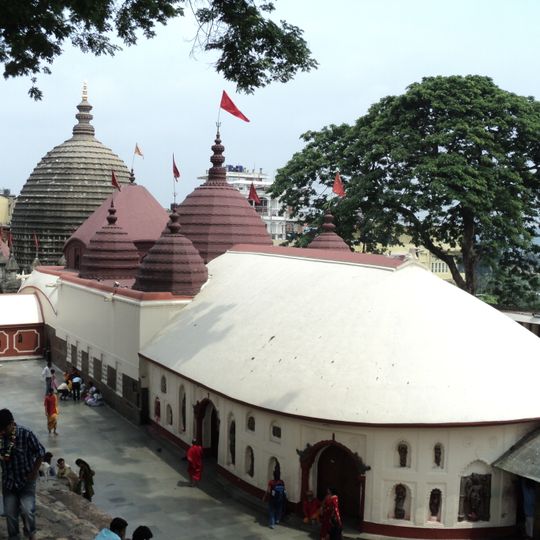
Kamakhya Temple is a Hindu temple complex on Nilachal Hill in Guwahati, Assam. Its main structure has a brick shikhara in the form of a polygonal beehive-shaped dome, surrounded by minaret-like angashikaras of the Bengal charchala type. The garbhagriha below ground holds a yoni-shaped rock fissure fed by a perennial spring, and the complex includes the calanta, pancharatna and natamandira chambers.
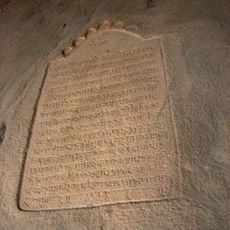
The Mlechchha dynasty patronised the goddess Kamakhya from the 9th century, when the Tezpur plates of Vanamalavarmadeva give the first epigraphic mention of her. The Kalika Purana, written under the Palas, linked Naraka with the goddess. The present structure dates from the 8th–9th century with rebuildings in the 11th–12th and 13th–14th centuries, and the 16th-century form defines the Nilachal style.
During the Ambubachi festival in mid-June, the shrine closes for three days because worshippers believe the goddess is menstruating. Pilgrims from all over the country come to receive cloth placed over the stone on the fourth day, and they bring offerings of red fabric and flowers.
Public buses from Guwahati run regularly to the hill, and visitors must climb a staircase of several hundred steps to reach the entrance. The shrine opens in the morning and afternoon, with a midday break, and menstruating women are allowed inside, which is often not permitted in other Hindu temples.
Instead of a statue, the interior contains only a wet stone cleft over which a natural spring flows and which represents the physical form of the goddess. The water is considered sacred, and priests collect it in vessels to give to pilgrims who carry it home.
The community of curious travelers
AroundUs brings together thousands of curated places, local tips, and hidden gems, enriched daily by 92,199 contributors worldwide.