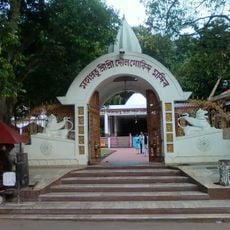
Hayagriva Madhava Temple, Hindu temple in Hajo, India.
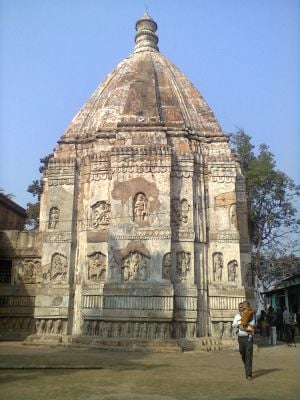
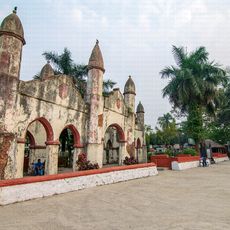
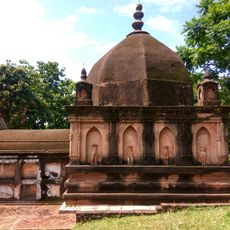
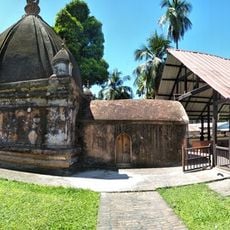
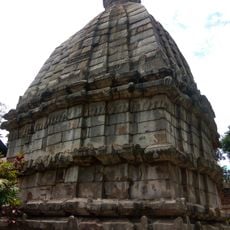
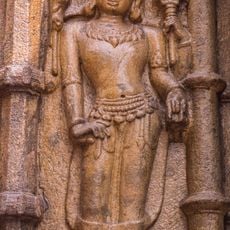
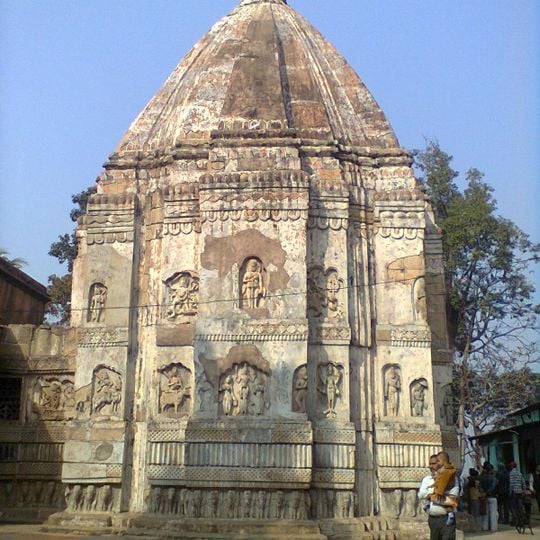
Hayagriva Madhava Temple stands on Manikut hill in Hajo, Kamrup district. Its stone walls are weathered, with patches of pale plaster, and flat pilasters divide the facade. A continuous row of carved elephants runs along the lowest level, while recessed panels hold reliefs of Vishnu's ten incarnations, including Buddha as the ninth, along with devotees in procession and scenes from the Ramayana and Mahabharata. The roof is a ribbed, tapering dome above a rectangular base.
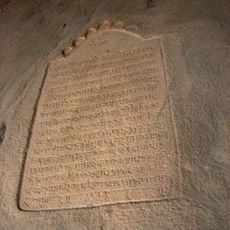
The present temple was rebuilt in 1543 by Koch king Raghudeva after Kalapahar destroyed an earlier structure; some buranjis credit the Pala dynasty with founding it in the 6th century. Inscriptions inside name Raghudeva and Ahom kings Pramatta Singha and Kamaleswar Singha. Sayani, first wife of Kalia Bhomora Borphukan, donated land and a family of paiks for the temple's upkeep under Kamaleswar Singha.
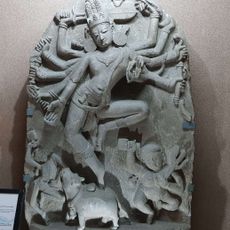
The name Hayagriva combines the Sanskrit words haya (horse) and griva (neck), after the horse-headed form of Vishnu worshipped here. Buddhists also revere the site, holding that Gautama Buddha attained nirvana at this spot, and lamas venerate the main idol as Mahamuni, the Buddha. Doul, Bihu and Janmastami are celebrated each year, and the sanctum lamps are kept burning without interruption.
The temple is located about 30 kilometers west of Guwahati and is easily accessible by regular bus and taxi services from the city. Morning visits work well since fewer pilgrims are present, allowing you to observe the structures and carvings with less congestion.
The lamps in the sanctum are never extinguished, an akhanda deep kept alight without interruption. Oil reaches the large earthen lamps through a simple tube connected to an oil tin, so the flame is fed without anyone entering the shrine.
The community of curious travelers
AroundUs brings together thousands of curated places, local tips, and hidden gems, enriched daily by 92,765 contributors worldwide.