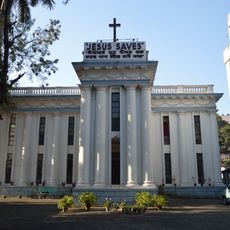
Armenian Church of the Holy Nazareth, Religious landmark in Burrabazar, India
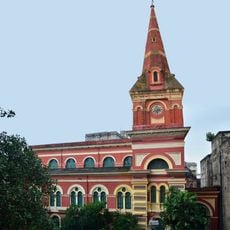
The Armenian Church of the Holy Nazareth is a Christian place of worship in the Burrabazar neighborhood of Kolkata, India, and also contains a cemetery within its grounds. The interior features marble surfaces, dark wooden pews, and tall windows that let in natural light across the nave.
The East India Company built a small wooden church here in 1708, the date officially taken as the church's founding; 2008 marked its tercentenary. After a fire, Aga Nazar (Jakob Nazar) raised funds and rebuilt it in 1724. The present building was erected in 1764 by Aga Mamed Hazar Maliyar on land donated by Kenanentekh Phanoosh, designed by Kavond of Persia.
The church is the seat of the Armenian Vicariate of India and the Far East, and most of Kolkata's Armenian community descends from the Armenians of Julfa in Iran. The altar holds a cross, the Gospel text and twelve candlesticks for the Twelve Apostles, with three paintings by A. E. Harris: "Holy Trinity", "Last Supper" and "The Enshrouding of Our Lord".
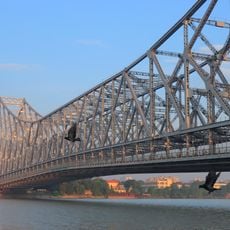
The church stands at 2 Armenian Street, in the northwest corner of Burrabazar near Howrah Bridge, and the graves of Calcutta Armenians surround it on all sides, with some gravestones inside the building. On the east side of the churchyard, remains of an Armenian Persian-type bath stand on the boundary wall of Hamam Street. The church has also hosted services for the Syrian and Russian Orthodox communities.
The cemetery holds the grave of Rezabeebeh Sookia, dated 1630, the oldest Christian grave in Kolkata; it shows Armenians settled here before the English arrived in 1690. On the churchyard's east side, by Hamam Street, remains of an Armenian-Persian bath stand in a boundary wall.
The community of curious travelers
AroundUs brings together thousands of curated places, local tips, and hidden gems, enriched daily by 92,815 contributors worldwide.