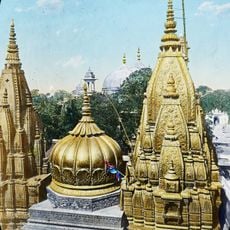
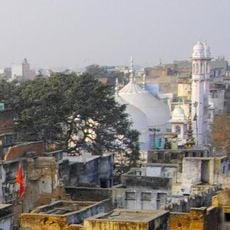
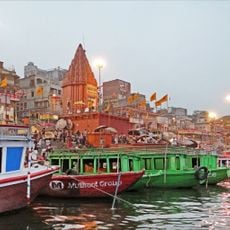
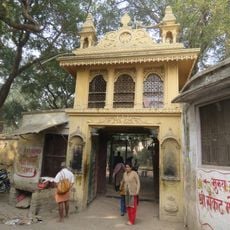
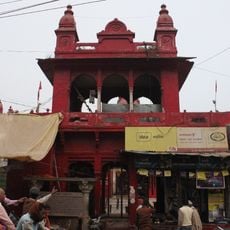
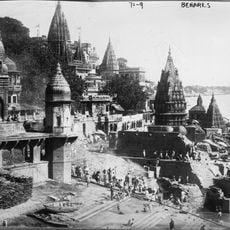
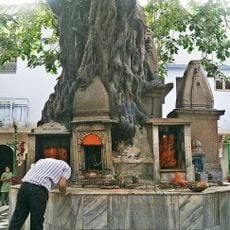
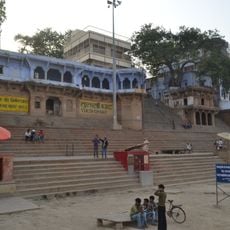
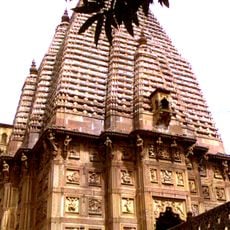
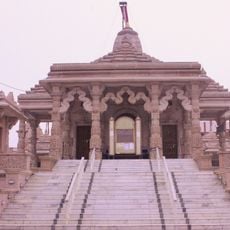
Ramnagar Fort, Fortification on Ganges River eastern bank in Ramnagar, India.
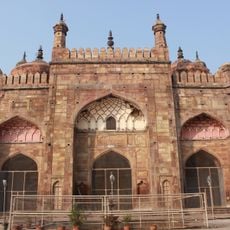
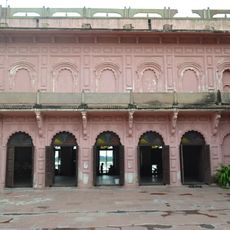
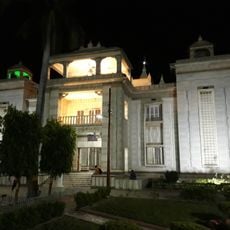
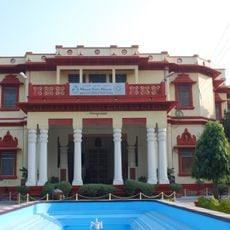
Ramnagar Fort is a fortification on the eastern bank of the Ganges River in Varanasi district, India. The sandstone structure consists of several buildings with courtyards, balconies and carved gateways surrounded by towers and walls.
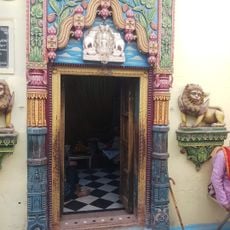
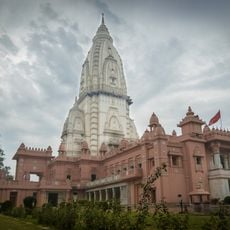
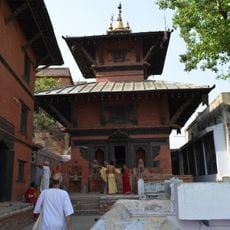
Kashi Naresh Maharaja Balwant Singh built the fort in 1750 from creamy-coloured Chunar sandstone, and it has served ever since as the residence of the Kashi Naresh. Inscriptions on the outer ramparts date the structure to the seventeenth century, earlier than the accepted construction date. The fort houses the Veda Vyasa Temple, a museum and the king's residential complex; Anant Narayan Singh, known as the Maharaja of Benares, still lives there although the royal title was abolished in 1971.
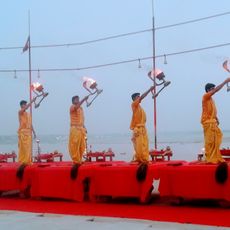
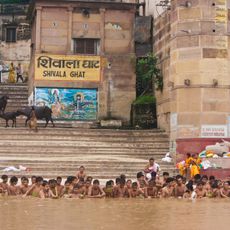
The fort's name day is marked by the month-long Ram Lila, when episodes of the Ramayana are staged in the streets behind the fort and the Maharaja rides a decorated elephant at the head of the procession. In Phagun (February–March) the Raj Mangal festival brings a procession of boats with singing and dancing from Asi Ghat along the river past the fort. In Magh (January–February) pilgrims gather before the Veda Vyasa temple.
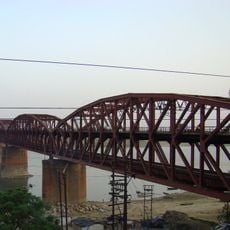
The fort stands on high ground above the flood level on the Ganges' eastern bank, opposite the Tulsi Ghat. It is 14 km from Varanasi and 2 km from Benares Hindu University; the Ramnagar bridge brings the drive from BHU to about 10 minutes, while a boat from Dashashwamedh Ghat takes about an hour. Only part of the structure is open to visitors, as the rest is the Kashi Naresh's residence.
The Saraswati Bhawan Museum inside displays an astronomical clock from 1852 that shows time, dates and planetary movements. The collection also includes royal palanquins and weapons from the era of the rulers of Benares.
The community of curious travelers
AroundUs brings together thousands of curated places, local tips, and hidden gems, enriched daily by 92,654 contributors worldwide.