Basavakalyana Fort, 10th-century military fort in Bidar District, Karnataka, India.
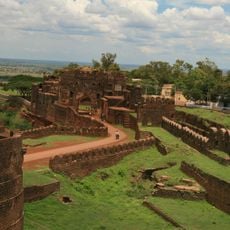
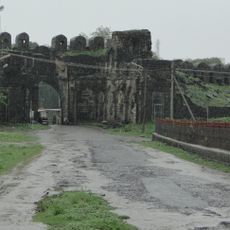
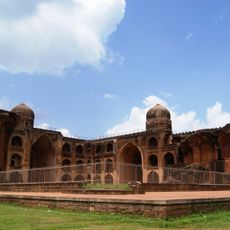
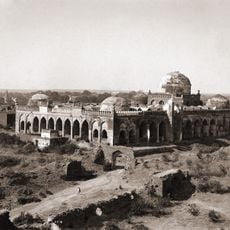
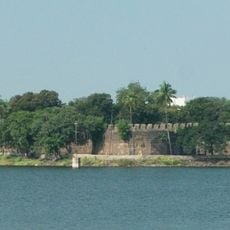
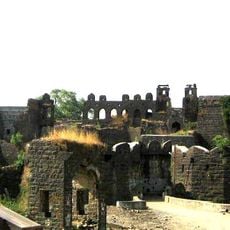
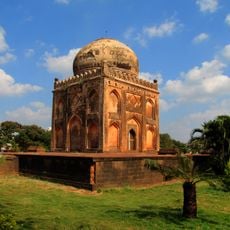
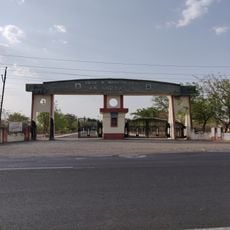
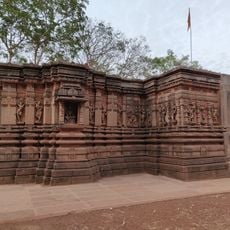
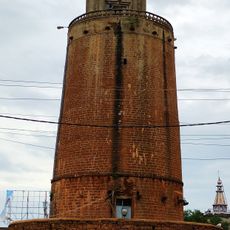
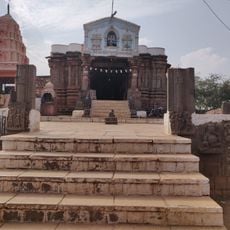
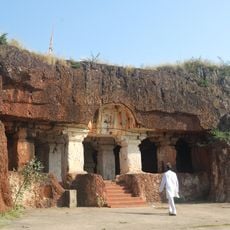
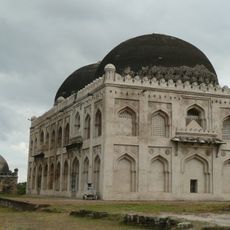
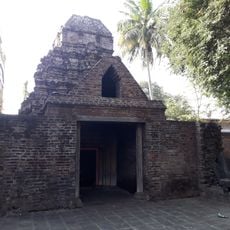
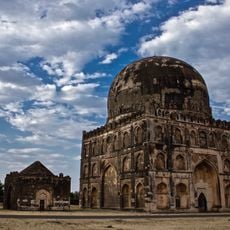
Basavakalyana Fort is a ruined stone and masonry fortification on a grassy slope in Bidar District, Karnataka. Its visible remains are two blocky, reddish-brown ruined sections with jagged tops and dark weathering stains, surrounded by green vegetation. The fort was built with three concentric irregular ramparts and seven gates, five of which are well formed. The entrance has a solid arch with balconies on both sides, reached by a series of steps, and the walls around the central courtyard contain staff rooms connected by many branches and fitted with cannons, some decorated. The fort walls are carved with images of yalis.
The fort was built in 973 by Nalaraja during the reign of Tailapa II, who had defeated the Rashtrakutas and moved the capital to Kalyana; inscriptions at the fort record this. It served as the royal capital of the Western Chalukya dynasty from 1050 to 1195, under Someshvara I and his successors. In 1310 it was attacked by Malik Kafur, and later rulers including the Bahmanis, Bijapur, Ahmadnagar, Vijayanagara and the Mughals held and refurbished it.
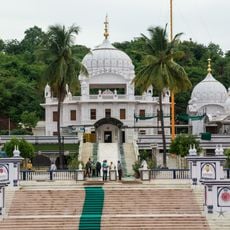
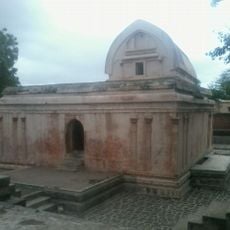
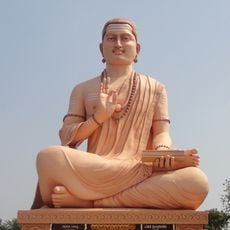
Basavakalyana is the karmabhoomi of Basavanna, founder of the Lingayatha community, and of Sharanas such as Akka Mahadevi, Channabasavanna and Siddarama. In the 12th century the town and its fort became the centre of a social and religious movement against casteism and orthodoxy, and a seat of learning. A Jain temple now in ruins stands here, and the museum adjoining the fort keeps Jain idols of the 10th and 11th centuries.
The location is about 90 kilometers from Gulbarga and 650 kilometers from Bangalore with regular visiting hours available. Guided tours are offered, and it is advisable to wear sturdy shoes during your visit as the terrain is uneven.
The fort was built in a naturally camouflaged setting, so it is not visible until an enemy is close, giving defenders time to repulse attacks. This siting was common among Deccan forts. The museum adjoining the fort keeps Jain idols of the 10th and 11th centuries.
The community of curious travelers
AroundUs brings together thousands of curated places, local tips, and hidden gems, enriched daily by 92,663 contributors worldwide.