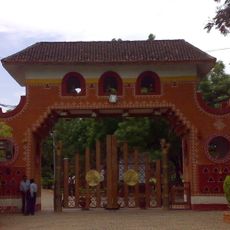
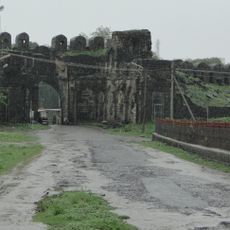
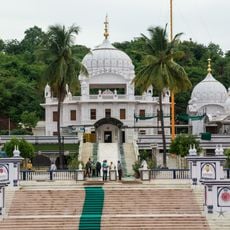
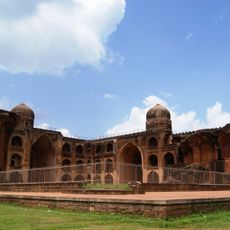
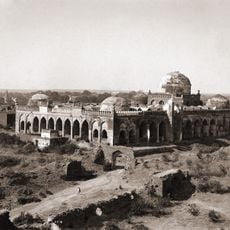
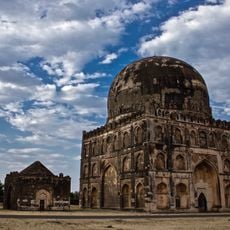
Bidar Fort, 15th-century fortification in Bidar district, India
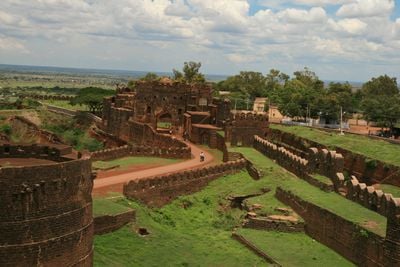
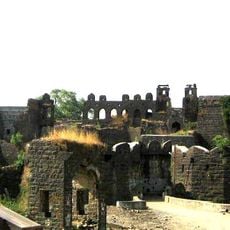
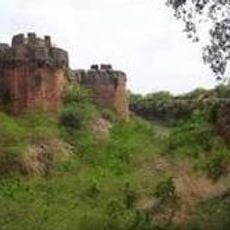
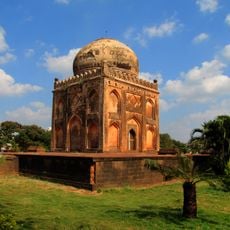
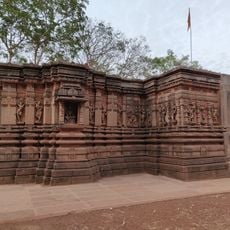
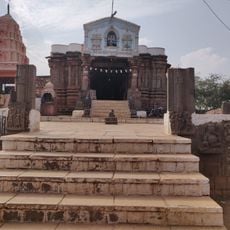
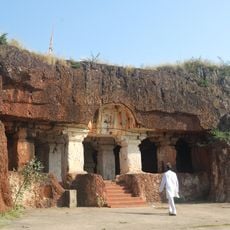
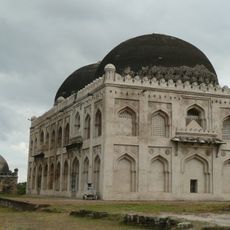
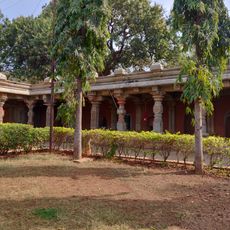
Bidar Fort is a 15th-century fortification that sits on a plateau with sturdy walls built from red laterite stone and mortar. The site contains several palaces, mosques, and administrative buildings spread across the fort grounds.
Sultan Ahmad Shah I of the Bahmanid dynasty moved his capital from Gulbarga to Bidar in 1427 and rebuilt the old fort in red laterite between 1429 and 1432, using stone from the excavated moat. The fort later passed to the Bijapur Sultanate in 1619–20, fell to Aurangzeb in 1657 and was formally absorbed by the Mughal Empire in 1686. In 1724 it became part of the Asaf Jahi kingdom of the Nizams; Salabath Jung ruled here from 1751 until his brother Asaf Jah II imprisoned and killed him in the fort on 16 September 1763.
The fort's name, Bidar, is shared by the city and district. The main gate follows Persian architectural models, and the Sherza Darwaza carries two carved tigers, a Shia symbol of victory and of Ali, believed to guard the fort. Crown and crescent emblems of Sasanian origin appear on Bahmani buildings. The 2011 Bollywood song "Ishq Sufiyana" from The Dirty Picture was filmed here.
You can explore the fort on level paths that lead through different areas, though some sections may have steps. It is best to visit early in the day and bring water, as there is limited shade across the plateau.
Bidar Fort's seven gates are named from east to west, among them the Mandu Darwaza, the Kalmadgi Darwaza, the Delhi Darwaza, the Kalyani Darwaza and the Carnatic Darwaza; two gates carry no name. The main gate follows Persian models, and the Sherza Darwaza bears two carved tigers, a symbol of victory in Shia belief and of Ali.
The community of curious travelers
AroundUs brings together thousands of curated places, local tips, and hidden gems, enriched daily by 94,084 contributors worldwide.