Takht-e Soleyman, Archaeological site and shrine in Chaman Rural District, Iran
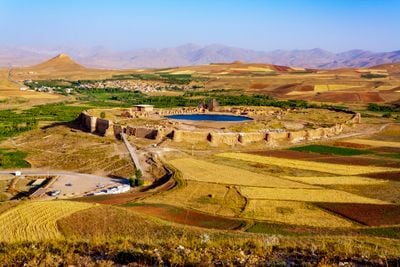
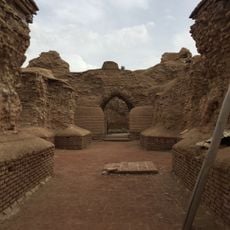
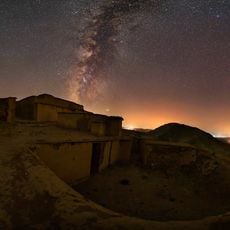
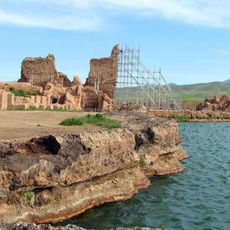
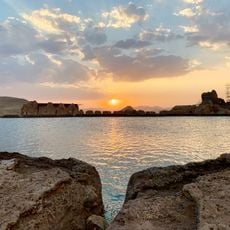
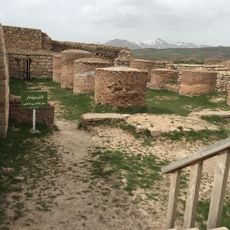
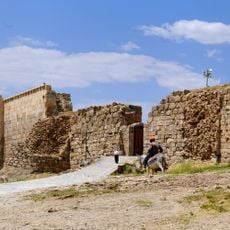
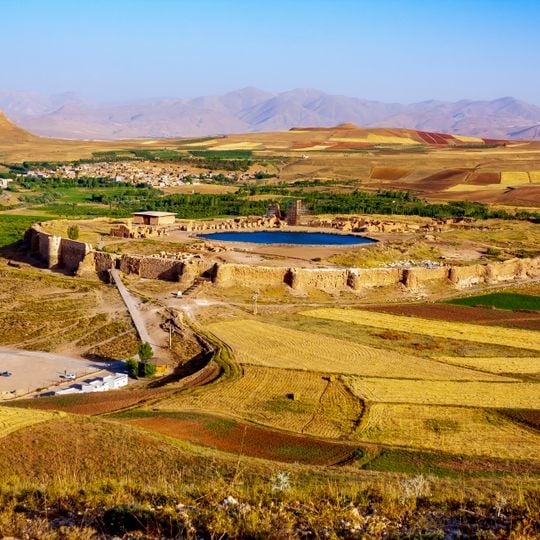
Takht-e Soleyman is an archaeological complex built on a fortified platform that towers above the surrounding landscape, containing a fire temple, a shrine, and residential spaces. The site displays layered construction from multiple cultures, with walls built from stone and brick that preserve different architectural traditions from each period.
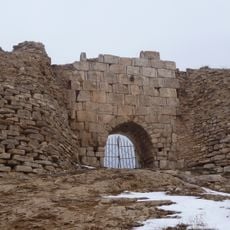
The site originated in late antiquity as a royal sanctuary of the Sasanian Empire, which constructed a fortress with powerful walls and defensive towers. Successive conquering powers adapted the structures over following centuries, leaving their own mark through repeated construction and modification.
The shrine honored the Zoroastrian goddess Anahita, blending fire and water worship in a single sacred space. These two religious traditions remain visible in the layout and construction choices that shaped the site over time.
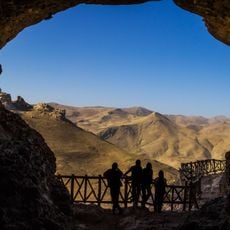
The site sits at high elevation in a region best visited during warmer months. Visitors should wear sturdy footwear as the terrain features uneven surfaces and multiple staircases throughout the grounds.
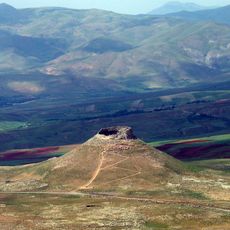
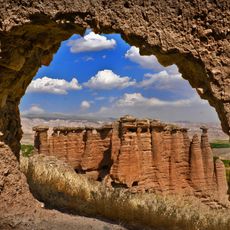
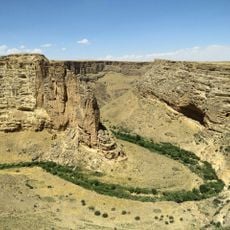
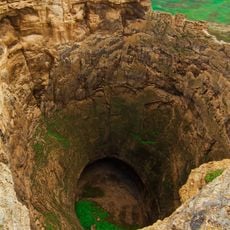
Beneath the platform lies an underground lagoon fed by natural underground springs that has never dried up over millennia. Nearby stands an active volcano with a deep chasm that releases plumes of steam, creating a striking natural feature that shapes the entire landscape.
The community of curious travelers
AroundUs brings together thousands of curated places, local tips, and hidden gems, enriched daily by 91,681 contributors worldwide.